
Gear Forging: A Complete Guide to the Forging Process
Why can gear forging increase component service life by 3 to 5 times? Why do some gears last 10 years while others suffer tooth breakage after just one year? The answer lies in its forging process, which is critical to gear strength and service life. This article will provide a detailed analysis of the core gear forging workflow adopted by Songjie forging manufacturer.
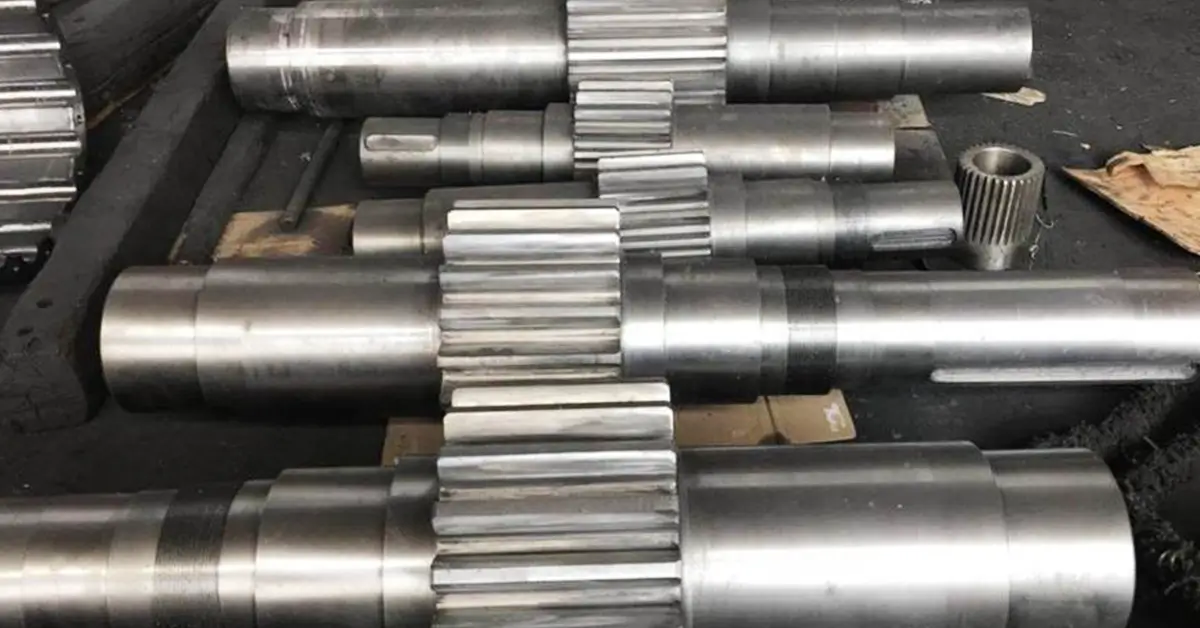
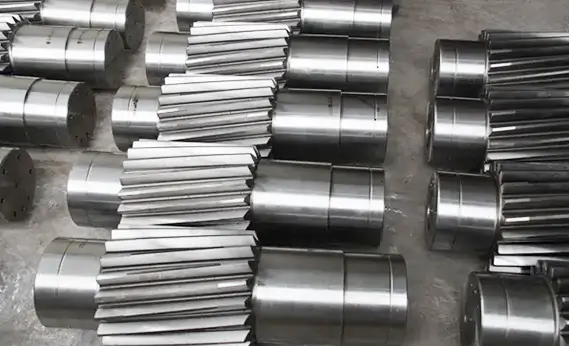
1.What is the Gear Forging Process?
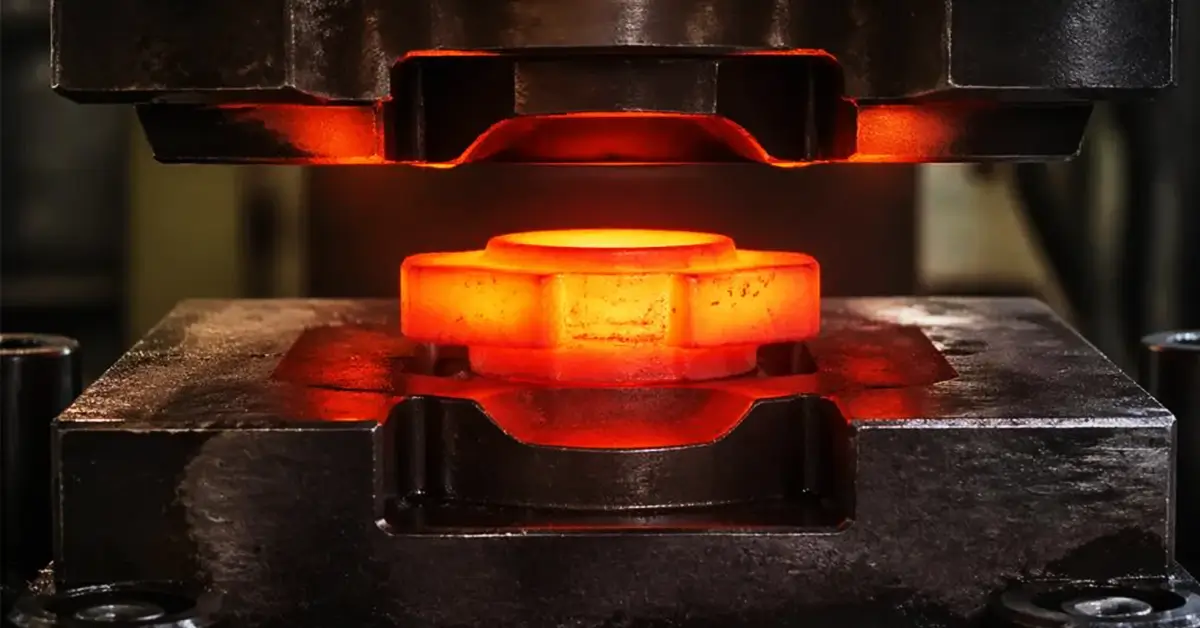
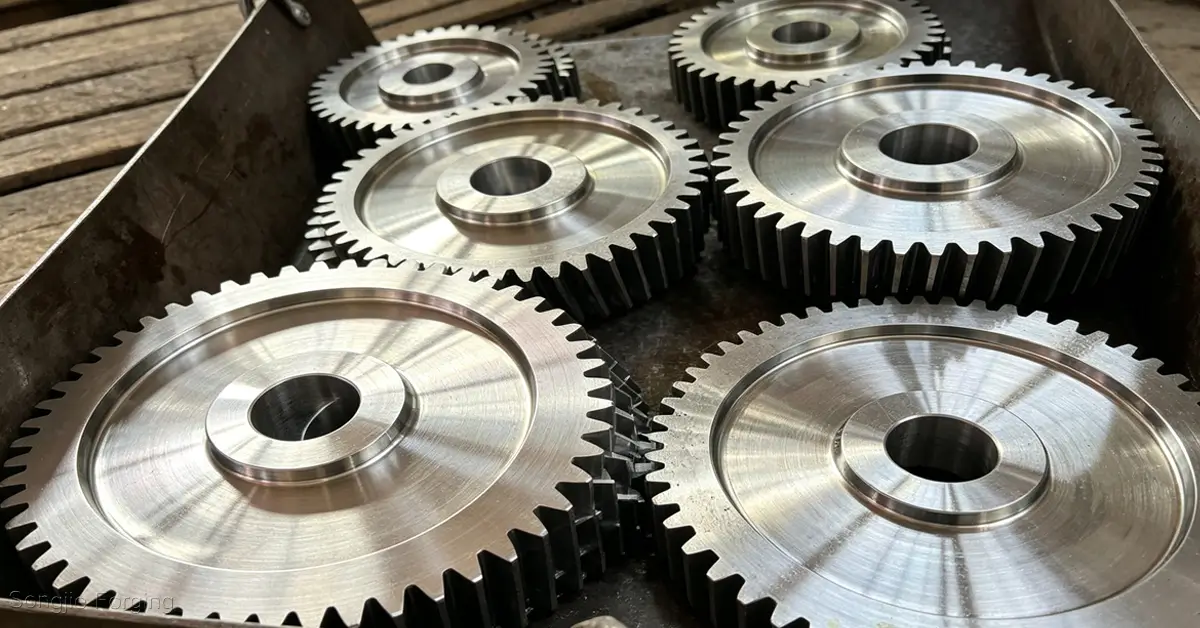
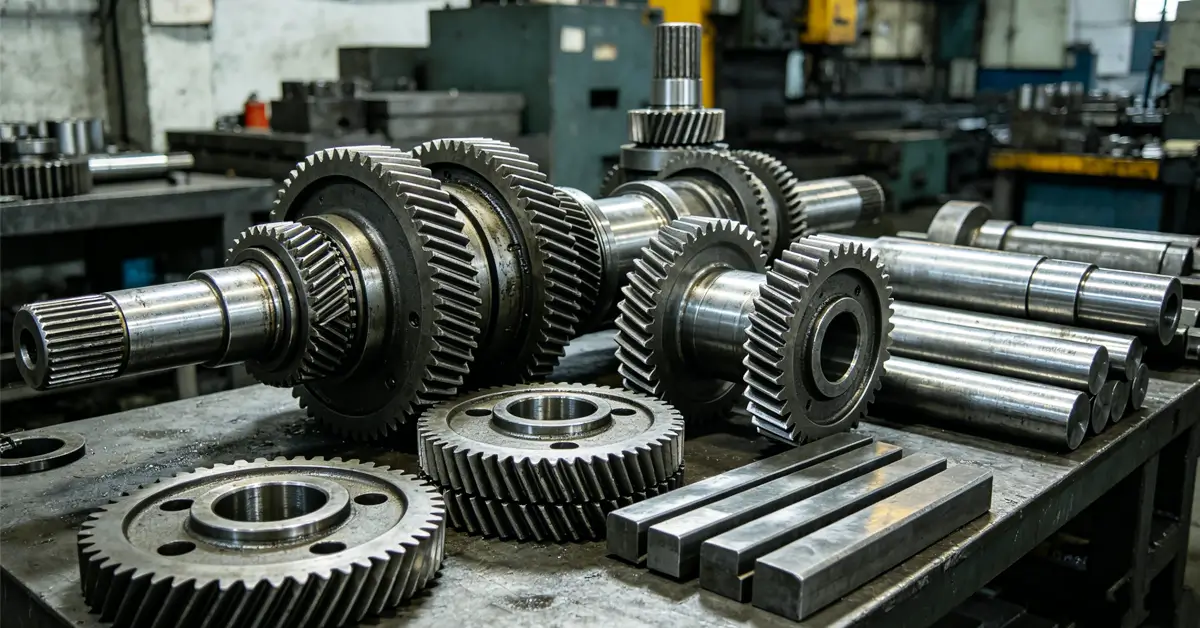
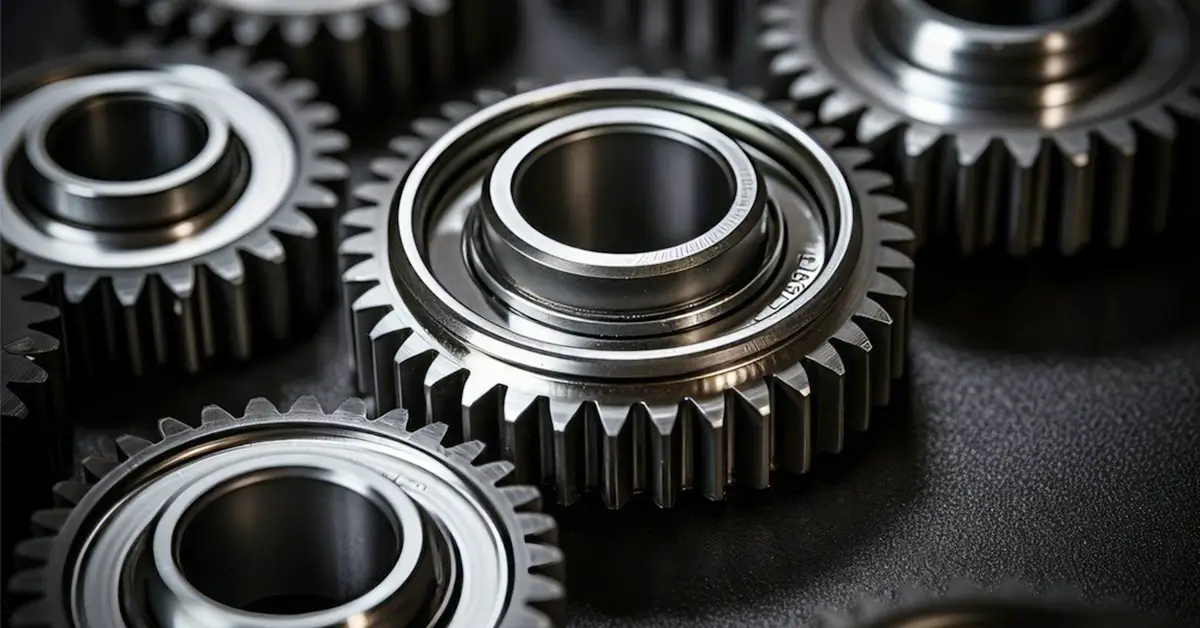
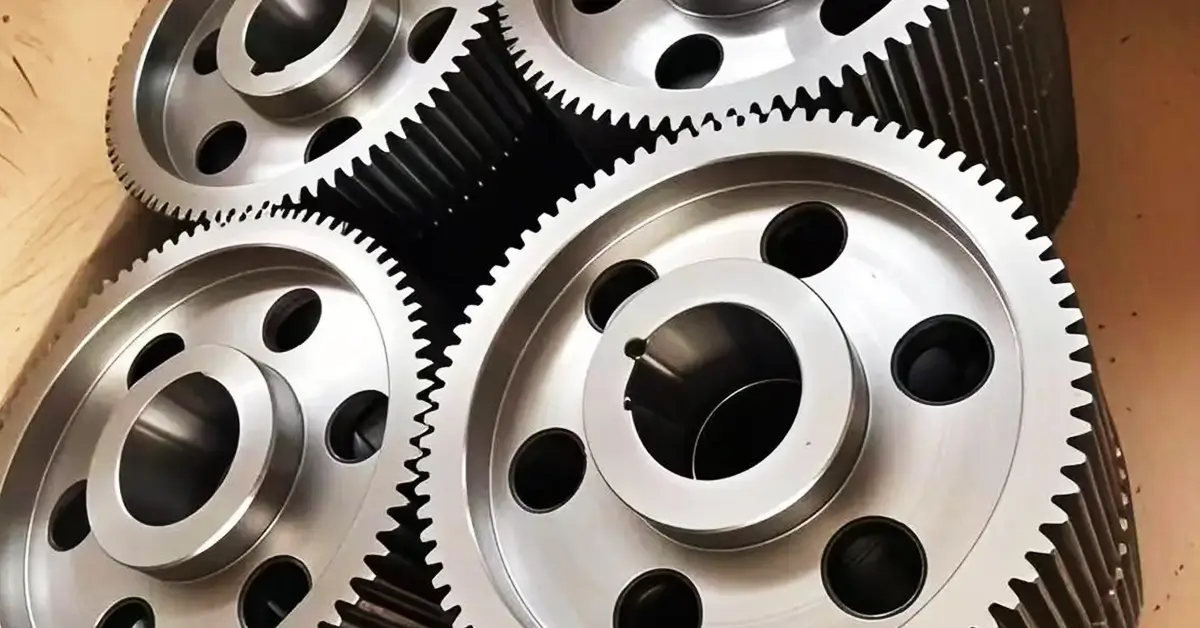
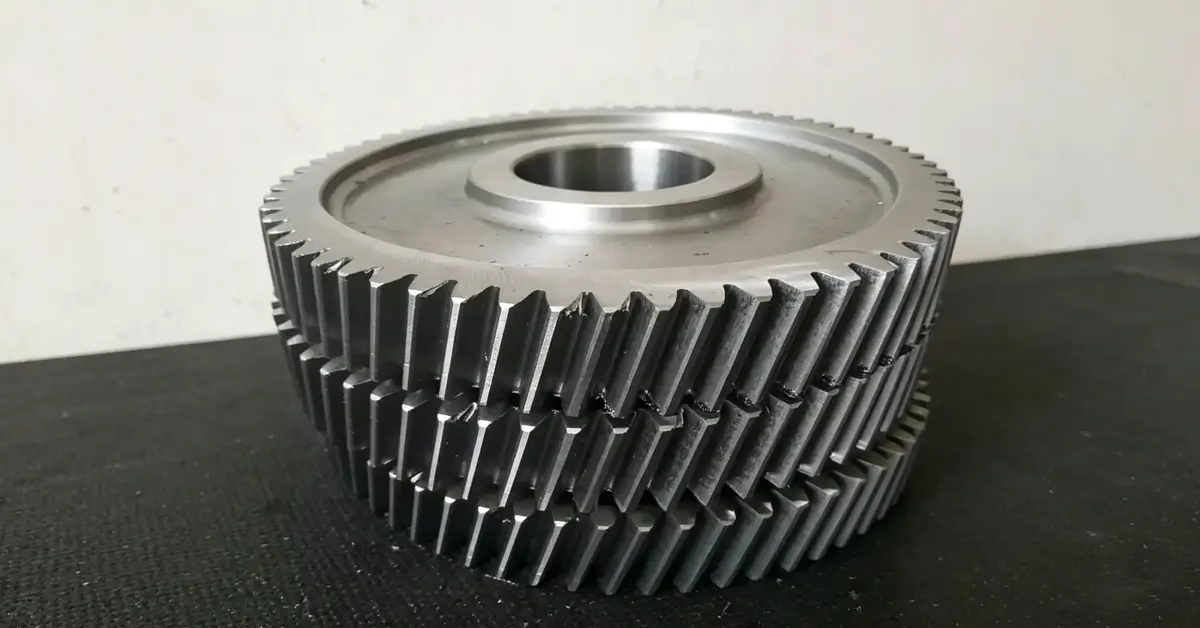
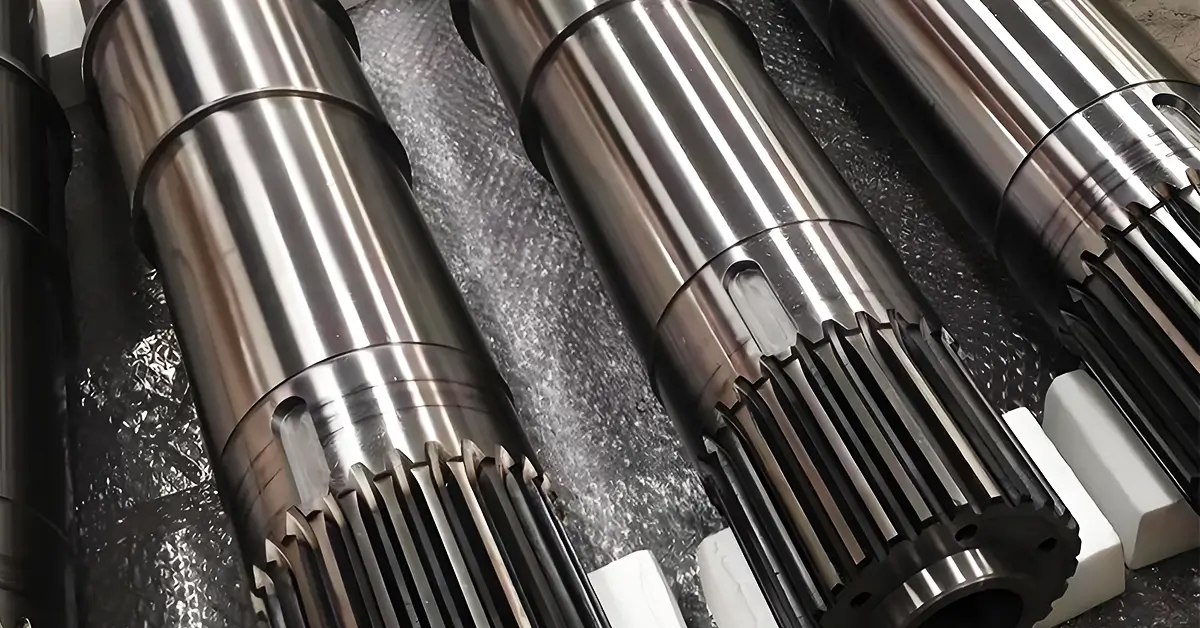
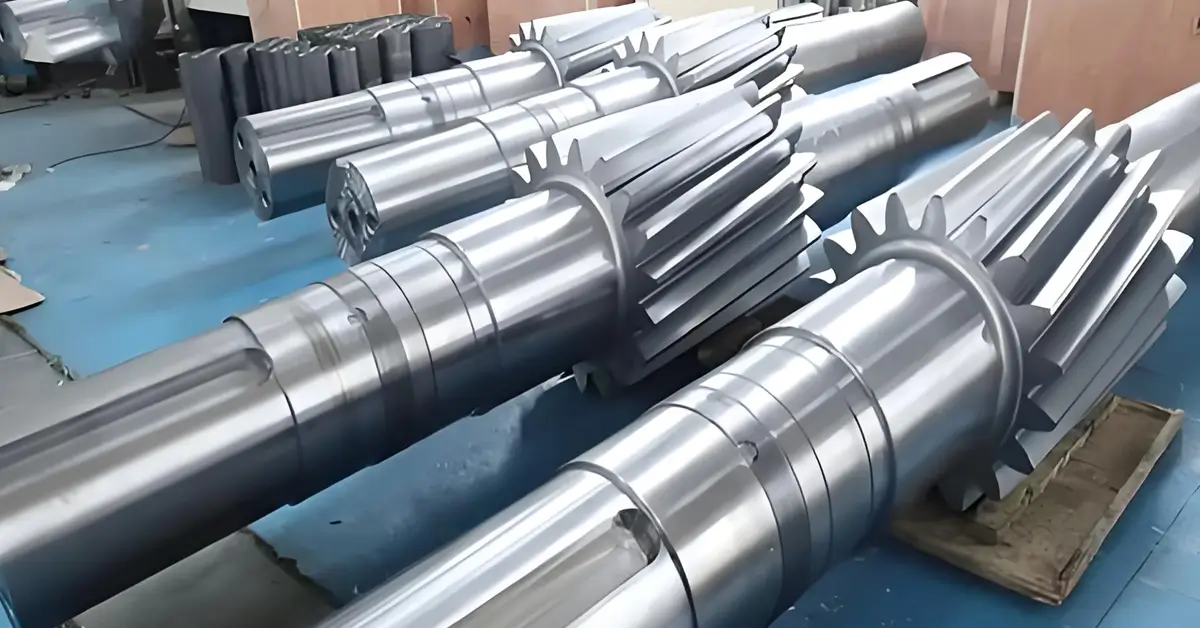
Gear forging is a metal forming process that uses pressure, hammering or other forming forces to induce plastic deformation of steel under specific temperature and die conditions, so as to produce gear blanks or workpieces close to the final gear geometry. Forging enables the metal grains to distribute continuously along the tooth profile and forms intact metal flow lines, which significantly improves the tooth root fatigue strength, impact toughness and wear resistance. Through proper metal flow, material control and heat treatment schedule, it lays a manufacturing foundation for parts that transmit torque and withstand impact or cyclic loads.
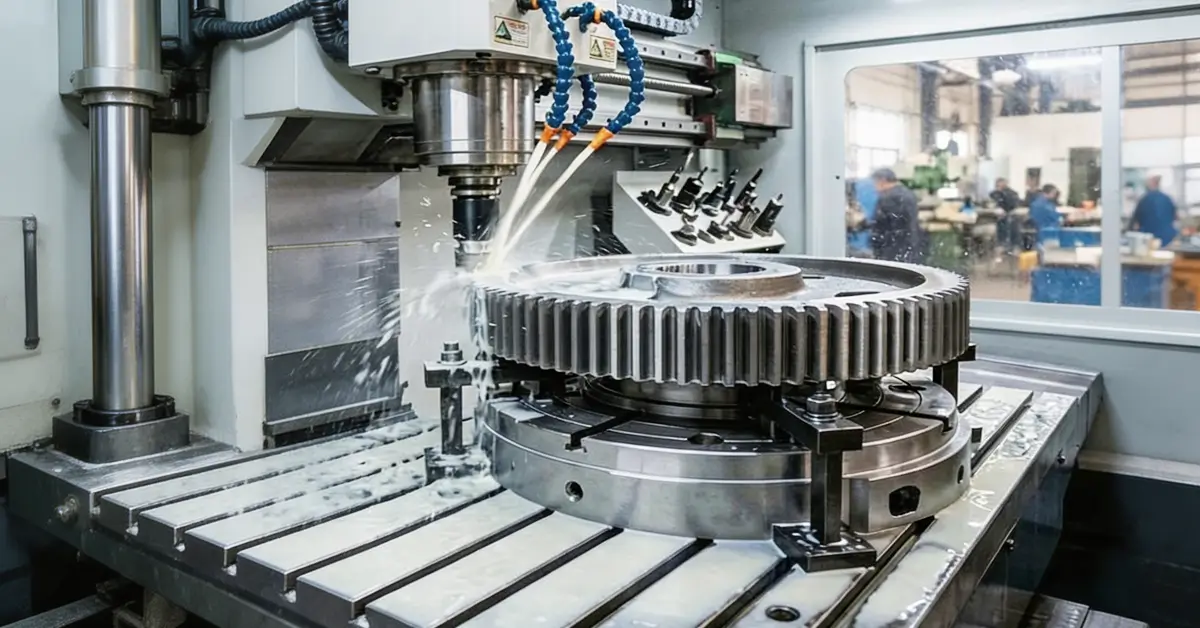
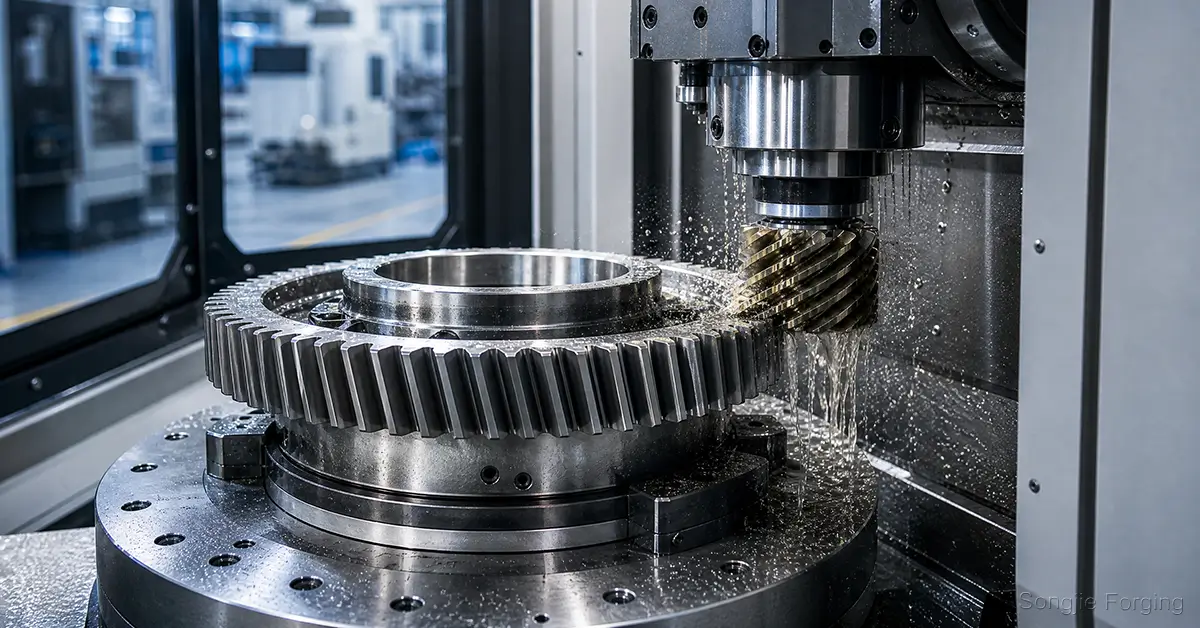
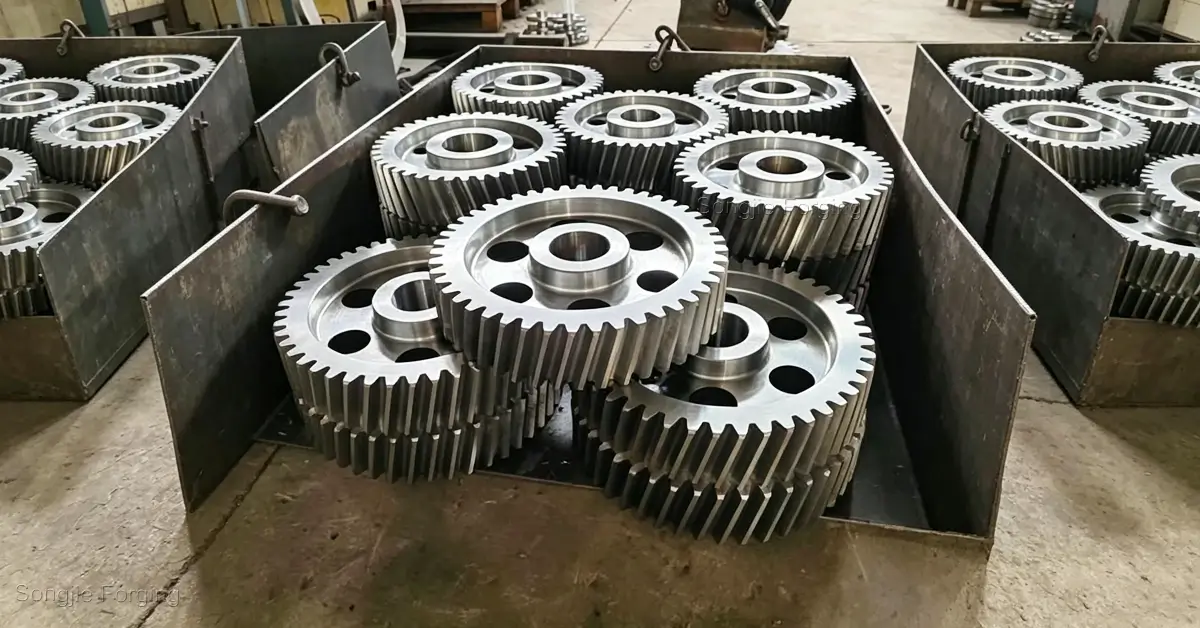
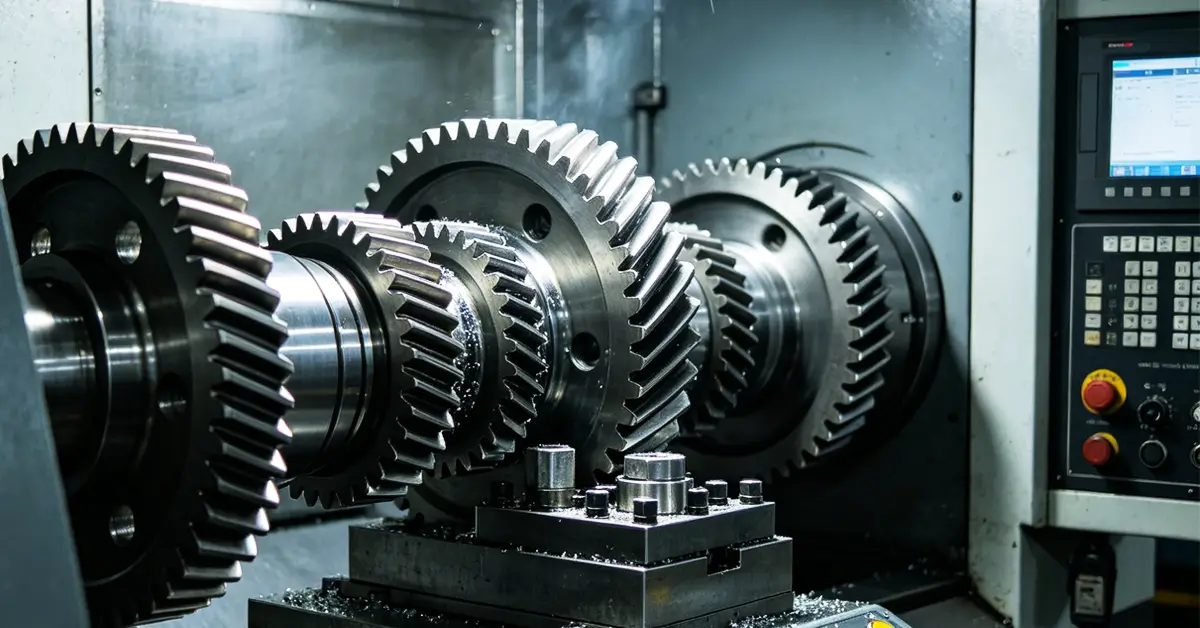
In practical industrial production, gear forging is usually applied to fabricate high-strength forged gear blanks at the first stage, followed by subsequent processes including turning, hobbing, shaping, shaving, gear grinding and heat treatment.
For products with stringent requirements, precision gear forging or near-net-shape forging can be adopted to make forgings closer to the final tooth profile and reduce the stock allowance for subsequent machining.
2. Core Process Flow of Gear Forging
A complete high-quality gear forging process consists of three major stages: pre-forging preparation, forging forming, and post-forging treatment. Songjie Forging adjusts the combination of procedures for gears of different specifications and precision requirements.
Stage 1: Pre-forging Preparation
1.1 Raw Material Selection
The maximum torque, impact load and fatigue cycles a finished gear can withstand are closely related to raw material selection. Appropriate steel grades shall be selected according to the gear service conditions:
- Medium carbon structural steel (45#, 50#): For gears under normal load and low-speed transmission
- Alloy structural steel (4340, 42CrMo, 20CrMnTi, 18CrNiMo7-6): Mainstream material for automotive gears, applied to gears under heavy load and impact conditions
- Carburizing steel (20CrNiMo, 8620H): High-speed and heavy-load gears used in automotive gearboxes, reducers, and high-reliability scenarios such as aerospace and wind power.
Once the material is selected, chemical composition testing, ultrasonic testing, surface quality inspection and other checks on the steel shall be carried out. This step directly determines the forming quality of the subsequent forged gear blank and the final service life. If the raw material fails inspection, all subsequent processes will be in vain.
1.2 Blanking
Based on the weight and dimensions of the gear forging, the billet volume is calculated. Round steel bars are cut into segments of specified length via sawing or shearing processes. Strict control over billet weight is required. Insufficient blanking volume may lead to incomplete die filling and defective tooth profiles. Excess blanking not only wastes raw material but also increases flash volume, forging load and the workload of subsequent trimming operations. Therefore, the blanking dimensions and weight of gear forging blanks are generally calculated by considering factors including final product volume, machining allowance, oxidation loss and flash.
In addition, clean steel smelting is a fundamental requirement for high-end gear forgings, which can effectively reduce the risk of hydrogen-induced cracking.
1.3 Billet Heating
Cut billet segments are fed into a heating furnace and heated to the forging temperature range. This is the most underrated step in gear forging. Before forging, the material is heated to a certain temperature to reach a plastic state for subsequent forming operations. It directly affects forming quality and die service life. The specific temperature depends on steel grade, forging method, cross-sectional size and equipment conditions; no single fixed temperature applies to all steel types.
Medium-frequency induction heating furnaces or low/non-oxidation heating furnaces are recommended. The goal is to minimize scale formation and improve material utilization. The heating rate shall be controlled in stages: preheat at low temperature, then slowly heat up to the target temperature and hold for soaking, to avoid thermal stress cracks caused by excessive temperature difference between the billet surface and core.
Stage 2: Core Forging Forming Processes
2.1 Upsetting and Preforming
Preforming is the operation before finish forging. Its purpose is to redistribute the billet metal to a shape close to the final forging, reducing deformation volume and flash loss during finish forging. The heated billet is vertically compressed to reduce height and enlarge cross-sectional area, breaking down the as-cast dendritic structure and compacting central porosity.
Its main objectives include improving metal flow, lowering final forging load, minimizing laps, enhancing die cavity filling capacity, extending die service life, optimizing final tooth profile quality, and preparing for subsequent punching operations.
Large gear forgings require repeated alternating upsetting and drawing to ensure uniform microstructure across the entire cross-section. Taking gearbox gears as an example, upsetting and drawing with curved, toothed top and bottom dies can improve deformation uniformity while balancing forming quality and production efficiency. For complex gears, especially parts with intricate hub, flange and gear rim structures, it is often impractical to achieve net forming in a single operation.
Stage 3: Finish Forging
Finish forging is the most critical and technically demanding core step of gear forging. The metal undergoes final plastic deformation within the finish forging die cavity to form the basic geometry of the forging. The main forming methods are as follows:
(1) Hot Forging: Metal deforms above its recrystallization temperature, offering good plasticity and low flow stress. Suitable for large gears, complex gear rims and mass production.
(2) Cold Forging: Forming carried out at room temperature with high dimensional accuracy and smooth surface finish. Metal flow lines run continuously along the tooth profile, which is especially ideal for near-net-shape forging of straight bevel gears, and is only applicable to small and medium-sized gears.
(3) Warm Forging: Combines the advantages of hot forging and cold forging. It generates minimal scale and delivers high precision together with excellent surface quality. The flow stress is lower than that of cold forging, resulting in reduced die load and higher material utilization rate.
(4) Warm-Cold Compound Forging: A near-net blank is first formed by warm forging, followed by cold forging sizing. The sized section achieves the precision level of cold forging while retaining the high productivity of warm forging. It represents a cutting-edge technical direction for precision gear forging nowadays.
Stage 4: Post-Forging Treatment and Inspection Procedures
4.1 Trimming, Straightening and Punching
After finish forging, the flash scrap on the edge of the forging is quickly removed using a trimming die. The gear blank is then immediately precision-sized in dedicated straightening dies to counteract minor deformation generated during forging, ensuring uniform and controllable machining allowance for subsequent machining operations.
For ring-type and disk-type gears with central bores, the punching process is adopted to form the inner hole. Punching uses a solid punch to pierce and remove the web to create the preliminary inner bore. The expanding process employs a mandrel and rollers to enlarge the diameter and adjust the wall thickness uniformity of the hub.
4.2 Post-Forging Heat Treatment
Performed after gear forging cooling and prior to machining, post-forging heat treatment is a core process that determines the final mechanical properties of gears. Its primary objectives are to modify microstructure, reduce hardness, relieve residual stress, improve machinability, and prepare the workpiece for subsequent machining and final heat treatment. Common process routes are listed below:
- Normalizing: Relieves forging stress and refines grain structure, with hardness controlled at HB170–210 to prepare for subsequent machining. Inadequate or omitted normalizing will greatly increase the risk of distortion and cracking during quenching.
- Quenching and tempering (quenching + high-temperature tempering): Delivers excellent comprehensive mechanical properties with strong core toughness, ideal for heavy-load gears.
- Carburizing and quenching: Creates a hard wear-resistant surface (HRC58–62) while maintaining a tough core, suitable for transmission gears used in automotive and construction machinery.
- Induction hardening: Achieves localized hardening on gear tooth surfaces with minimal distortion, applicable to medium and large gears.
4.3 Surface Cleaning and Finishing
- Shot blasting / sand blasting: Removes surface scale and improves surface roughness.
- Rough machining: Turning of inner and outer circles and end faces to leave stock allowance for finishing.
- Gear tooth machining: Hobbing, shaping, grinding, shaving and other operations to meet final tooth profile accuracy and surface finish requirements.
4.4 Quality Inspection and Warehousing
A full-process traceability system is implemented. Key inspection points include:
- Dimensional inspection: Critical dimensions measured via coordinate measuring machines (CMM), with tolerances reaching IT9–IT11.
- Non-destructive testing: Ultrasonic testing for internal defects, magnetic particle testing for surface cracks.
- Metallographic inspection: Grain size, inclusions, carburized layer depth and hardness gradient.
- Performance testing: Mechanical indicators such as hardness, tensile strength and impact energy.
FAQs about Gear Forging Process
A: A forged gear blank is a gear-shaped or disk-shaped forging produced prior to final gear cutting and finishing operations.
A: Not necessarily. In conventional processes, a gear blank is fabricated first, and the tooth profile is then formed via hobbing, shaping, broaching and other operations. Gear grinding may also be carried out after final heat treatment. Precision gear forging can reduce machining allowance, yet whether tooth machining can be eliminated must be verified against target accuracy, tooth surface quality, heat treatment distortion and final inspection requirements.
A: It is recommended to submit 2D or 3D drawings, gear type and tooth profile parameters, material specification, dimensions, unit weight, quantity, heat treatment condition, machining boundaries, critical inspection requirements, delivery location and trade terms.
Conclusion
As a core segment of gear manufacturing, gear forging determines the yield rate, dimensional consistency and service life at every stage from blanking to delivery. Therefore, every detail in pre-forging preparation and forging operations for forged gear must be strictly controlled to pursue excellence and produce high-quality forged gears.
Related Articles
What Level of Transmission Noise Is Determined by Mechanical Gear Materials?
Different selections of mechanical gear materials bring different transmission noise levels, Songjie can customize mechanical gears with various raw materials, we compare diverse gear materials to fit your actual demands.
Mechanical Gears Grinding vs Honing: Which Reduces Noise Better?
Comparison of grinding and honing processes in precision machining of mechanical gears, exploring which is more suitable for low-noise transmission — Songjie supplies high-quality silent mechanical gears.
High Precision Gears Processing Methods
Still troubled by gear noise and wear? Songjie supplies a full range of high-precision gears with multiple machining methods available, delivering premium high-precision gears for your needs.