
Mechanical Gears Grinding vs Honing: Which Reduces Noise Better?
In high-speed transmission systems, noise reduction has evolved into a core performance metric. Gear precision machining directly impacts transmission noise, vibration and service life. Among all machining processes, gear grinding and gear honing for mechanical gears stand out as the two most widely discussed technologies for noise reduction. Which one achieves superior noise reduction performance? Drawing on Songjie’s extensive machining expertise, this article carries out a multi-dimensional analysis to help you pick the best process for quiet transmission, making it an ideal choice for electric vehicles (EV) and high-precision application scenarios.
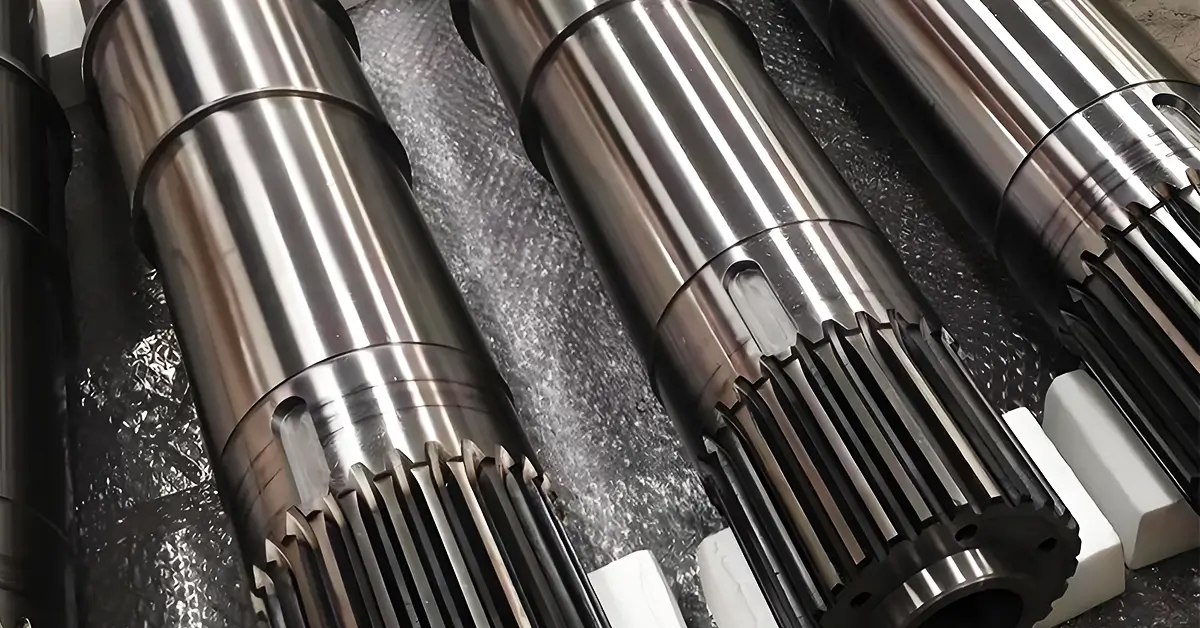
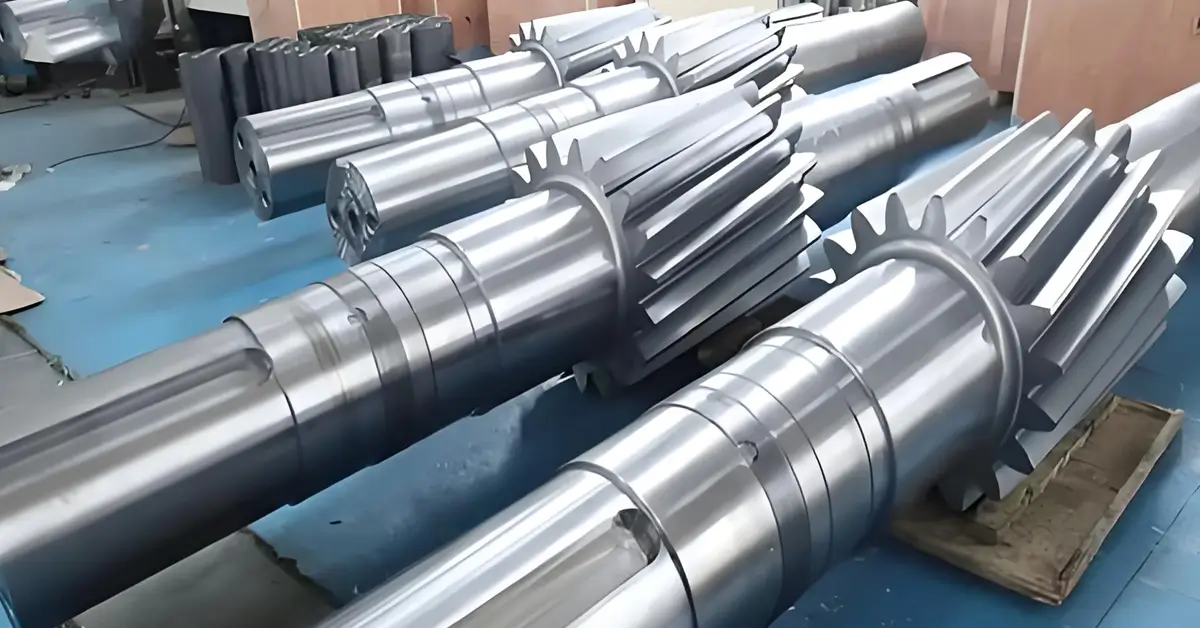
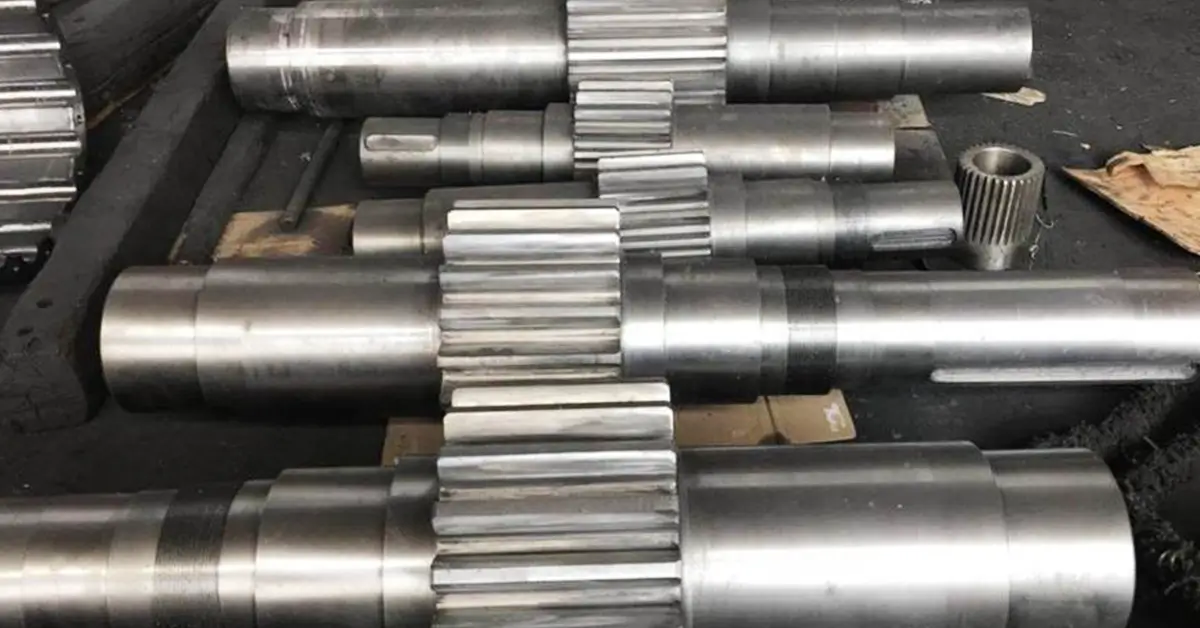
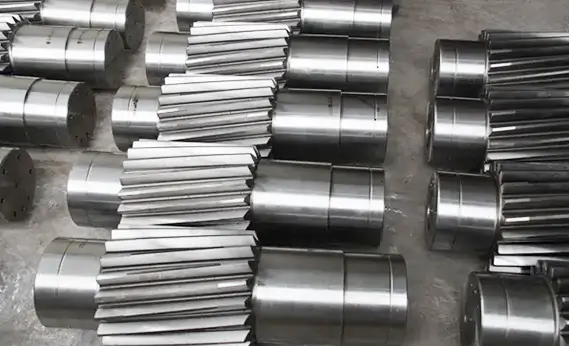
I. What are Gear Grinding and Gear Honing for Mechanical Gears?
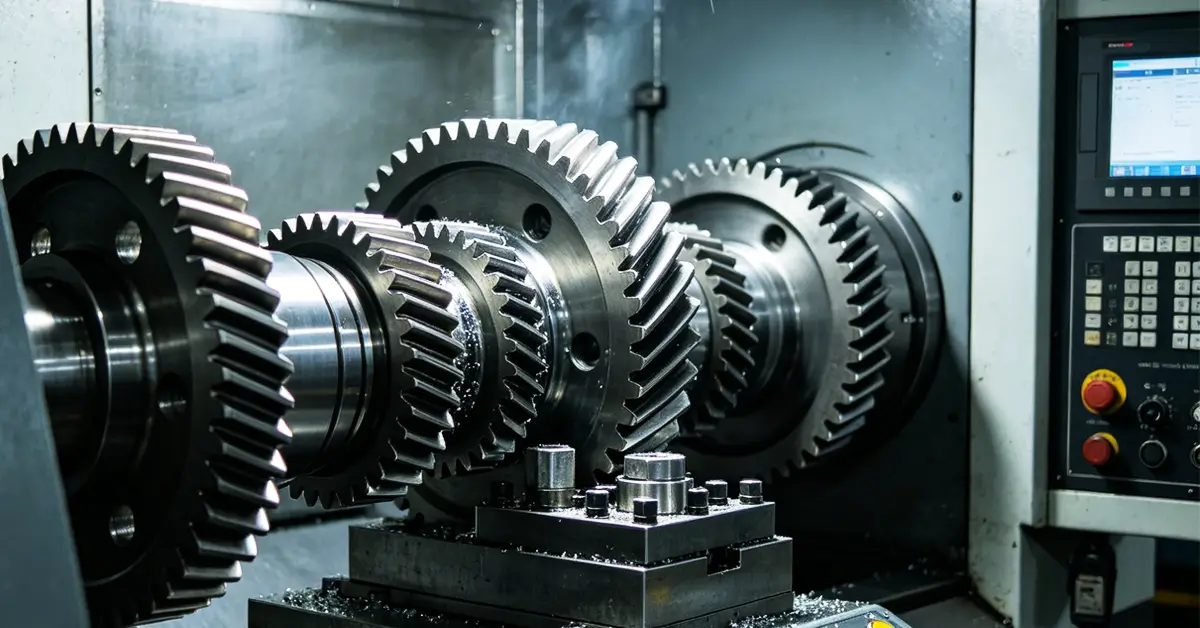
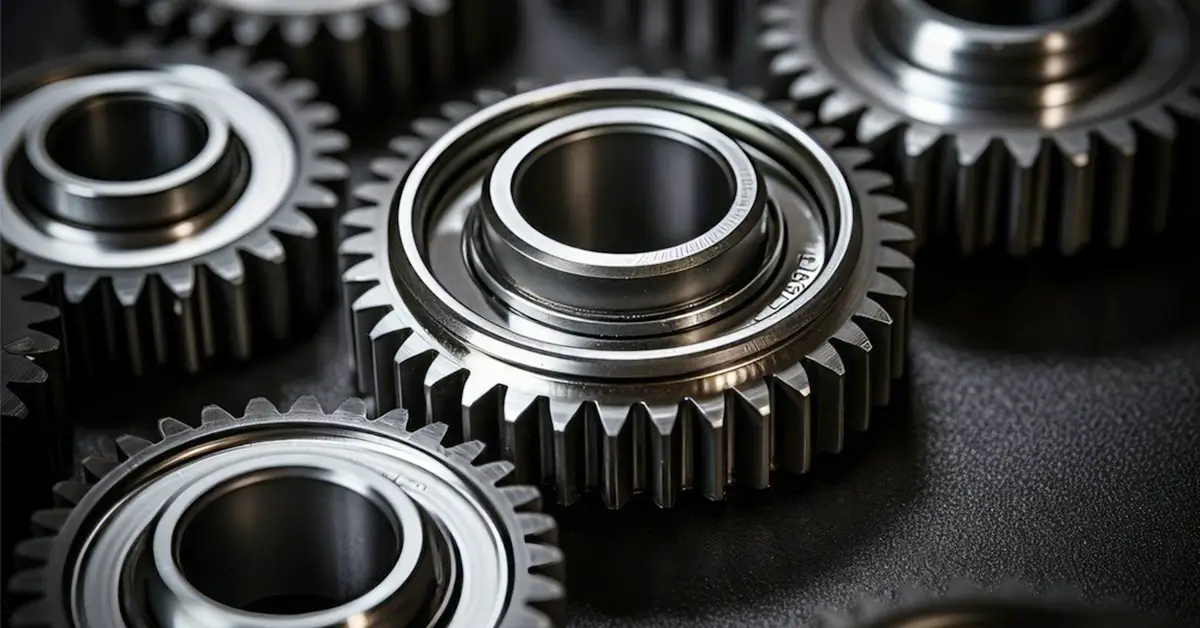
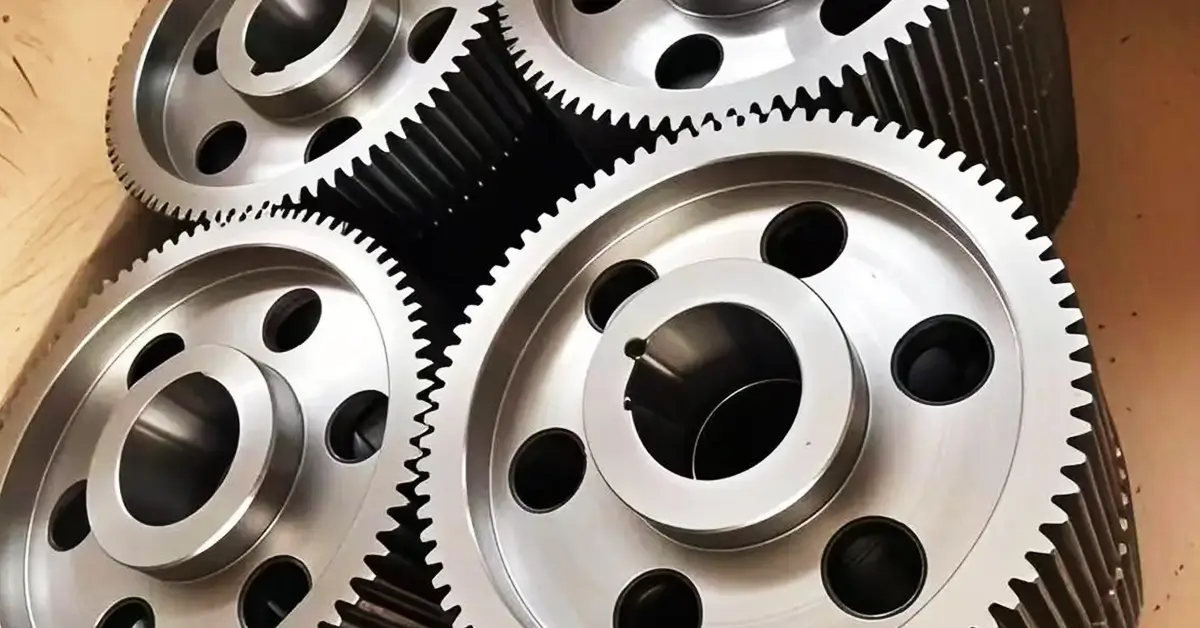
Gear grinding is a high-precision machining process. It uses grinding wheels to perform micro-cutting on gears and correct distortion caused by heat treatment, so as to achieve superior dimensional accuracy and surface finish. This process is also applicable to quenched gears. It features rigid machining conditions and stringent precision requirements, and is commonly adopted for mass production and applications with extremely strict noise control standards.
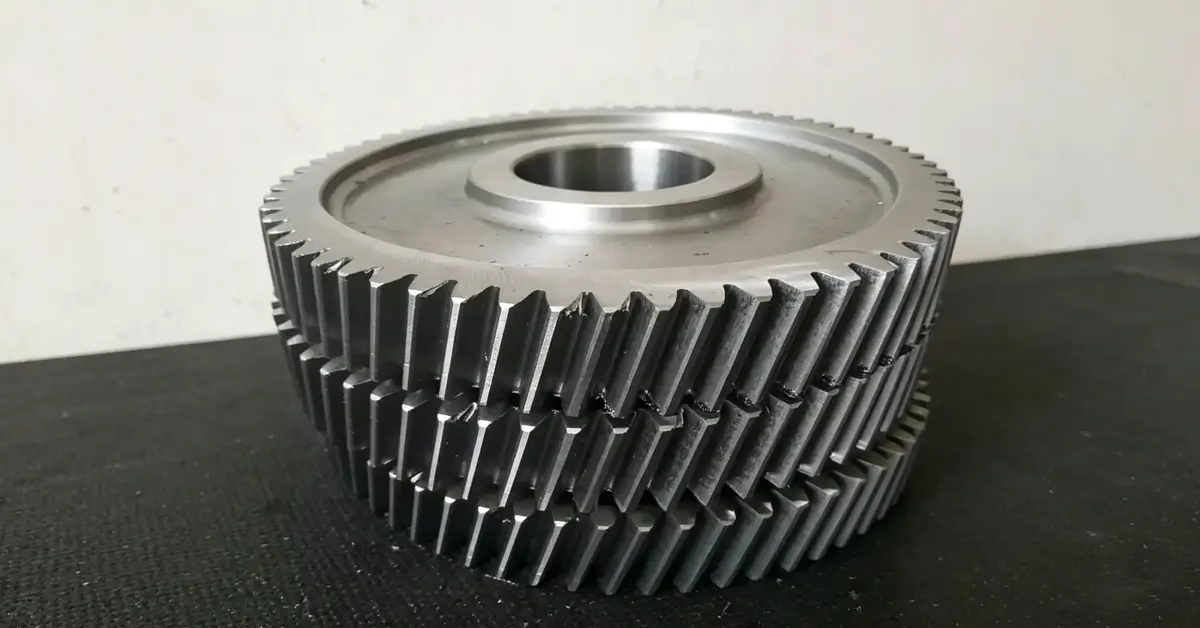
Gear honing is a flexible profile finishing process for gears. Via the relative motion between the honing wheel and the gear, it removes tiny burrs and machining marks on tooth surfaces, improving surface smoothness and precision, and forming a tooth surface topography conducive to noise reduction. It is suitable for small-batch production and high-precision components.
II. Analysis on Noise Reduction Performance of Grinding and Honing
Low-noise transmission has become a key requirement for modern mechanical equipment. Especially in the automotive, aerospace and high-end industrial equipment sectors, the noise level of mechanical gears directly determines the market competitiveness of products. So how do gear honing and gear grinding perform in terms of noise control?
1. Surface Texture
The tooth flanks processed by mechanical gear grinding present regular, unidirectional grinding marks (high-frequency ripples) parallel to the meshing direction. This periodic texture easily causes resonance with the transmission system and induces parallel ripple resonance, producing high-frequency squealing and abnormal noise. Meanwhile, it reflects and amplifies meshing impact forces in a fixed direction — this problem is particularly prominent in transmissions of high-speed electric vehicles.
Differently, mechanical gear honing forms unique cross-curved textures on gear tooth flanks, which are not parallel to the line of action. These random intersecting textures block vibration transmission paths and disrupt sustained resonance, effectively suppressing high-frequency noise and fundamentally eliminating resonance during high-speed operation. It not only greatly reduces transmission noise, but also disperses the overall noise energy over a broader frequency range. Tests verify that under identical operating conditions, honed gears reduce noise by 3–8 dB compared with ground gears — a critical improvement for quiet drive performance. Gear honing boasts inherent advantages in texture optimization. Its unique surface texture facilitates the formation of a stable oil film and absorbs vibration, serving as a direct and effective solution for transmission noise reduction.
Leading overseas gear grinding technologies have even developed dedicated low-noise grinding solutions. These adopt CNC control to disrupt conventional grinding patterns and replicate the curved textures of honed gears. This fact fully demonstrates the outstanding superiority of honing texture in noise reduction.
2. Surface Roughness
The surface roughness of precision gear grinding generally reaches Ra 0.2 – 0.8 μm.
High-power gear honing can deliver ultra-fine surfaces with Ra < 0.2 μm. It features superior surface quality, smoother tooth flanks, more stable lubricating oil film and lower friction noise. The advantages are particularly prominent under high-speed operating conditions.
Both processes achieve excellent surface finish. Gear honing outperforms gear grinding in ultra-precision surface machining; its ultra-smooth surface effectively reduces friction and abnormal noise.
3. Residual Stress and Thermal Damage
High-speed grinding generates intense heat on tooth flanks. Improper process control may cause tooth flank burn, tempering or tensile residual stress. Tensile stress accelerates the propagation of microcracks, leading to premature pitting, increasing operating noise during long-term service, and becoming a root cause of noise issues and fatigue failure. Even precision grinding leaves a thermally damaged layer, which degrades NVH performance over time.
Low-speed honing delivers extremely low heat input. As a cold working process, it causes no thermal damage or phase transformation. Plastic deformation during machining creates deep compressive residual stress on tooth flanks, which restrains crack initiation and propagation, and improves fatigue life and wear resistance. This maintains stable noise performance of mechanical gears throughout their service life — a critical factor for long-term quiet transmission.
4. Machining Accuracy and Profile Modification Capability
Gear Grinding: It features high geometric accuracy (DIN Grade 3–6) and excels at correcting tooth profile and tooth pitch errors. As the primary process for eliminating heat treatment distortion, it delivers ultra-high geometric precision. In addition, CNC profile modification enables complex topological optimizations such as tooth tip relief and crowning.
Gear Honing: Conventional gear honing has limited error correction capacity. However, modern power honing for mechanical gears, equipped with CNC technology, can achieve DIN Grade 5 accuracy, comparable to grinding. It is capable of rectifying errors in tooth profile and tooth lead. This process is particularly adept at noise-reduction profiling: the cross-honing texture optimizes meshing contact inherently, thus reducing impact and vibration. For complex modifications such as anti-twist crowns, honing is more efficient and cost-effective than grinding.
For transmission gears, gear grinding takes precedence in guaranteeing smooth meshing in terms of macro geometry. For most applications, nevertheless, gear honing provides sufficient accuracy. The combined hobbing-honing process chain offers higher productivity while maintaining required precision.
5. Productivity and Cost
Gear grinding features long cycle time, high costs for equipment and cutting tools, and rapid grinding wheel wear. It is not suitable for mass production of low-noise gears such as those used in electric vehicle transmissions.
Gear honing boasts short cycle time, long service life of CBN honing wheels, low energy consumption and high productivity. Its overall cost is 20–50% lower than grinding, making it ideal for mass manufacturing. Therefore, gear honing delivers superior cost efficiency while maintaining required performance, and is particularly well-suited for high-volume production in the automotive and other industries.
III. FAQs on Noise Reduction of Machined Gears by Grinding and Honing
A: No. Gear honing serves as a finishing process rather than a primary corrective operation. For gears with severe heat treatment distortion, gear grinding is still required first to correct geometric errors, followed by honing to optimize surface texture.
A: Honing produces herringbone cross-hatch patterns on tooth flanks. This distinctive texture disrupts periodic contact and suppresses regular vibration. Fundamentally, it blocks vibration transmission, eliminates resonance, improves lubrication, and reduces meshing impact and friction excitation. It achieves a noise reduction of 3–5 dB compared with the parallel texture from gear grinding.
A: Gear grinding excels at achieving ultra-high precision. It reduces noise by improving tooth surface accuracy (controlling surface roughness at Ra 0.4–1.0 μm) and optimizing tooth profile, cutting noise by 3–8 dB. High-precision grinding combined with profile modification can deliver a noise reduction of over 10 dB.
Conclusion
In addition to the above aspects, the noise reduction processes for mechanical gears are affected by multiple factors. Therefore, the selection between gear honing and gear grinding shall be made based on a comprehensive evaluation of specific application requirements. For applications demanding extremely low noise and high precision, gear honing is undoubtedly the preferred option. In scenarios prioritizing high productivity, gear grinding remains an indispensable core process. Furthermore, the selection of mechanical gear materials also has a direct impact on transmission noise. At Songjie, we deliver customized solutions to meet your targeted noise reduction requirements and are committed to manufacturing high-quality gears.