
Steel Gear Applications Guide for Different Materials
Gears serve as core transmission components in mechanical transmission, industrial manufacturing, heavy-duty equipment and other sectors, each delivering distinct performance advantages. While steel gear applications vary widely depending on material grades, they remain critically essential in all working conditions. This article thoroughly analyzes the industry-specific usage scenarios of gears fabricated from common materials. Rational material matching not only greatly enhances equipment reliability, optimizes total expenditure, but also taps into brand-new market prospects.
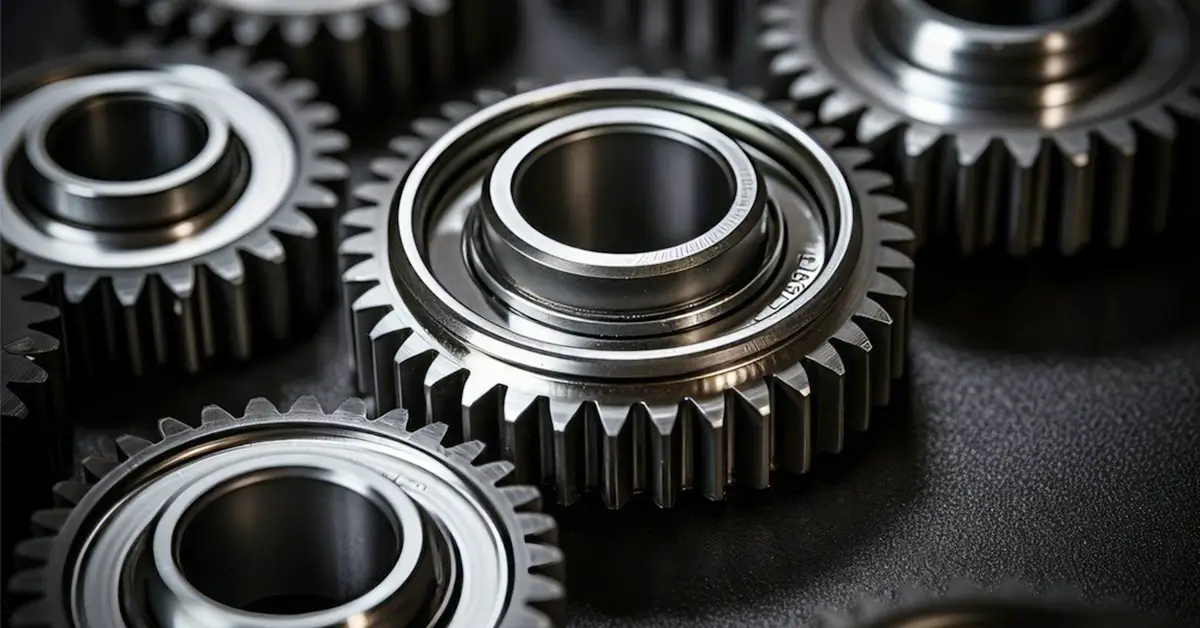
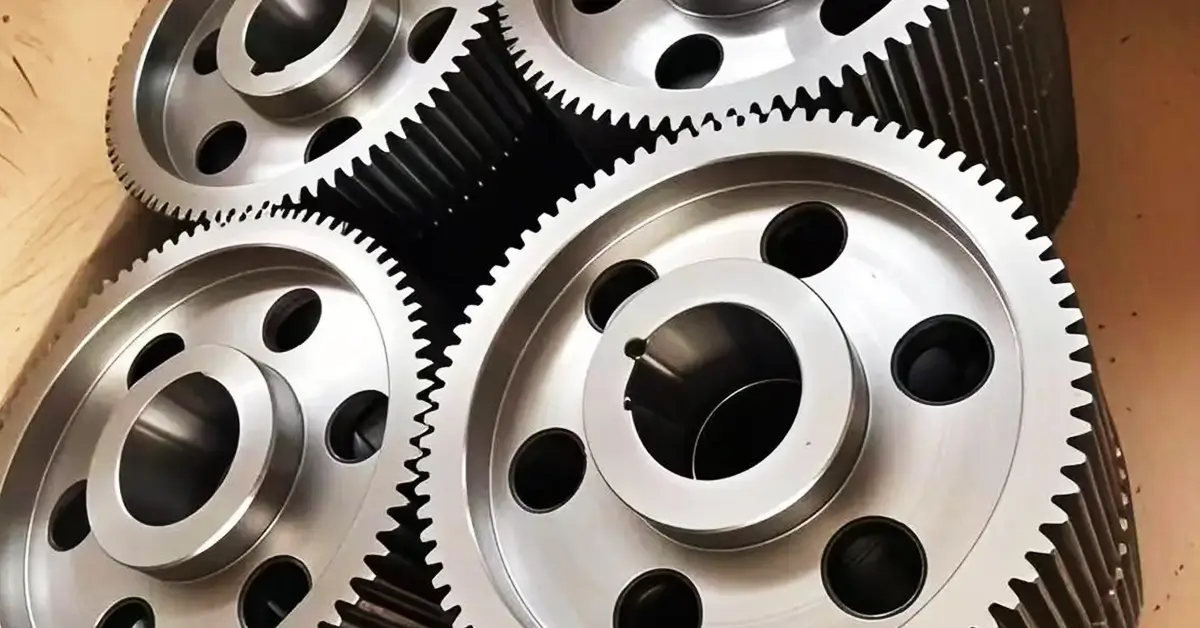
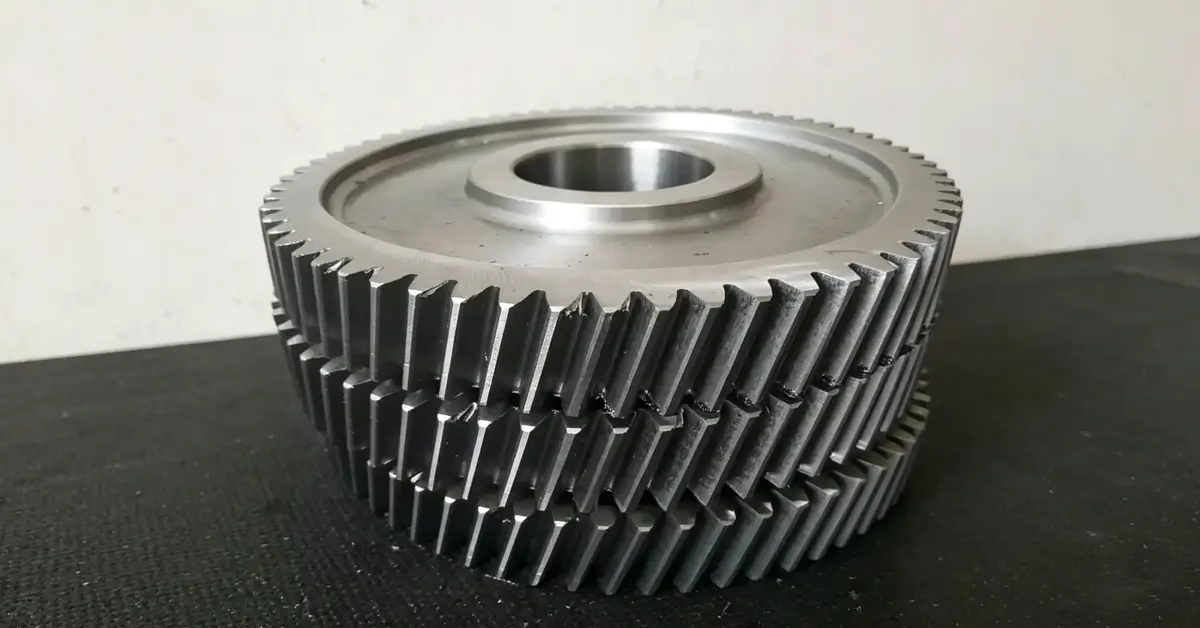
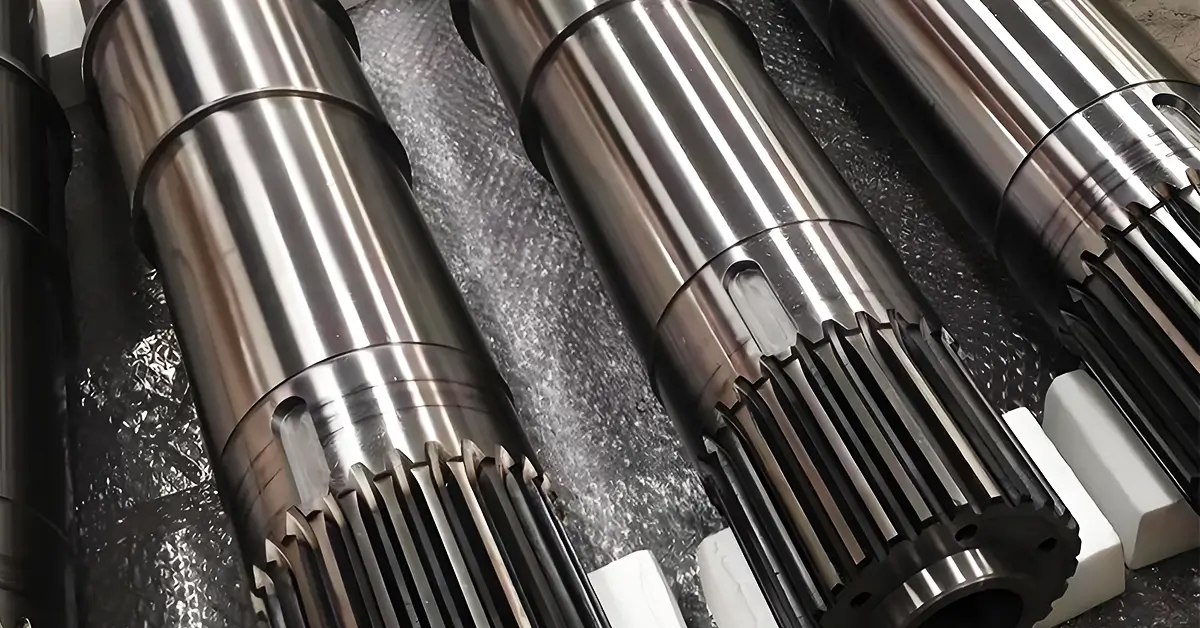
I. The Importance of Selecting the Right Steel Gear Material for Your Applications
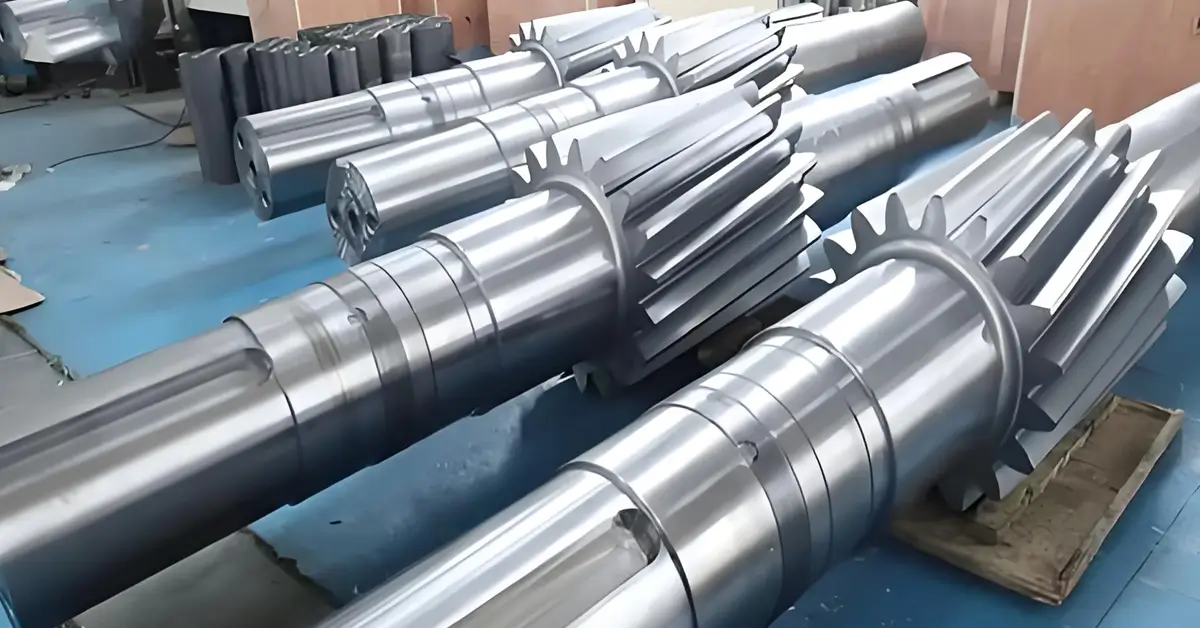
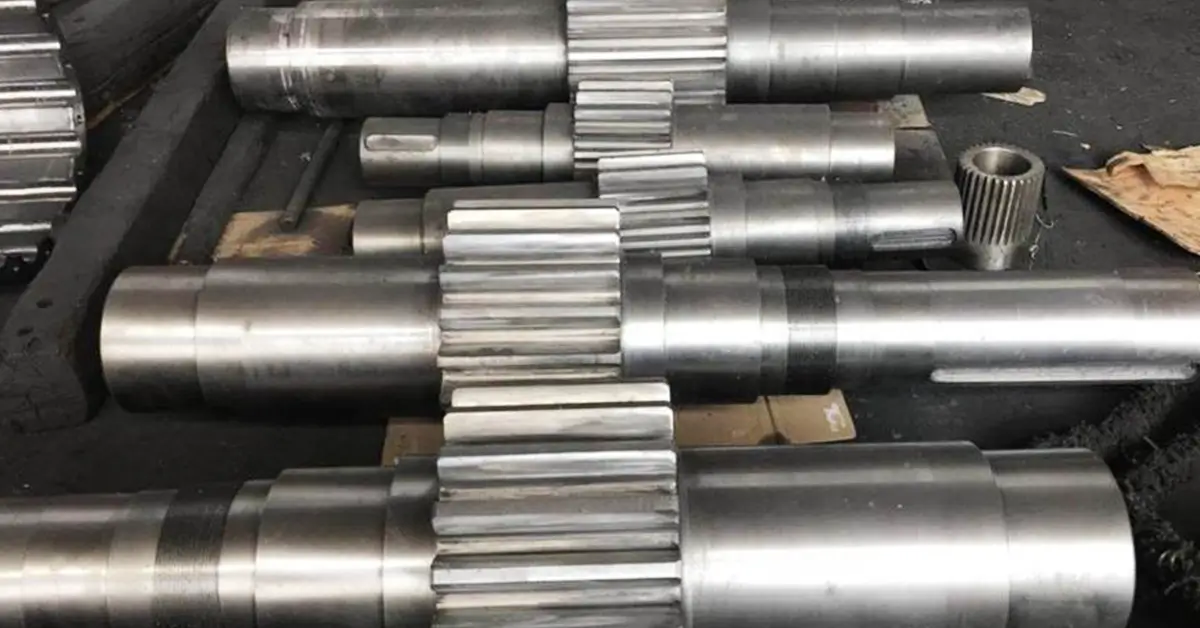
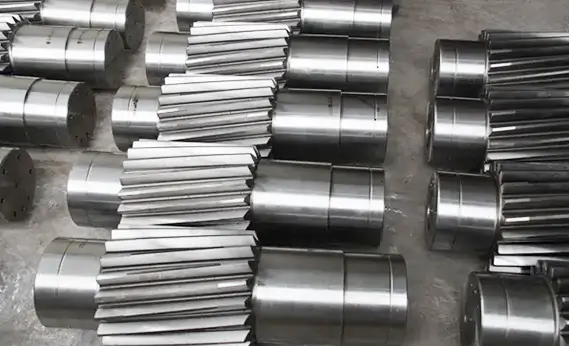
Given the wide-ranging steel gear applications, material selection is critical and requires comprehensive consideration of multiple factors. A gear’s material performance directly determines the operational efficiency, stability and service life of the entire equipment. Improper steel selection for gears may lead to premature pitting on tooth surfaces, gear tooth fracture, or unnecessary cost losses from over-engineering. In contrast, choosing the correct steel grade delivers optimal performance at a reasonable cost.
II. Steel Gear Applications of Different Materials
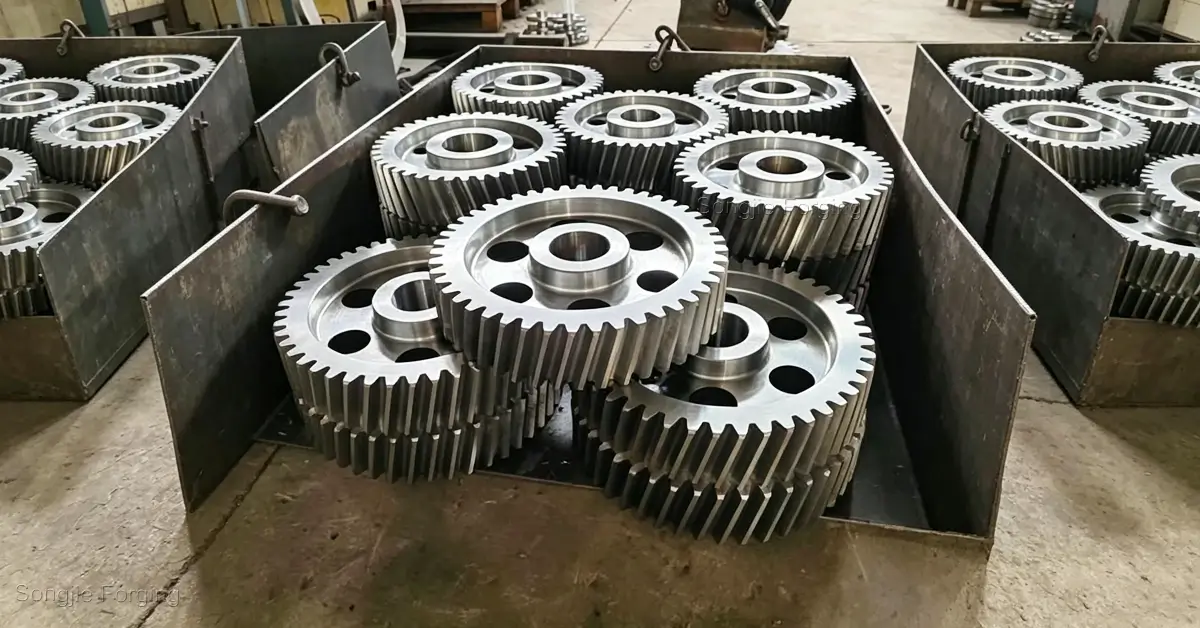
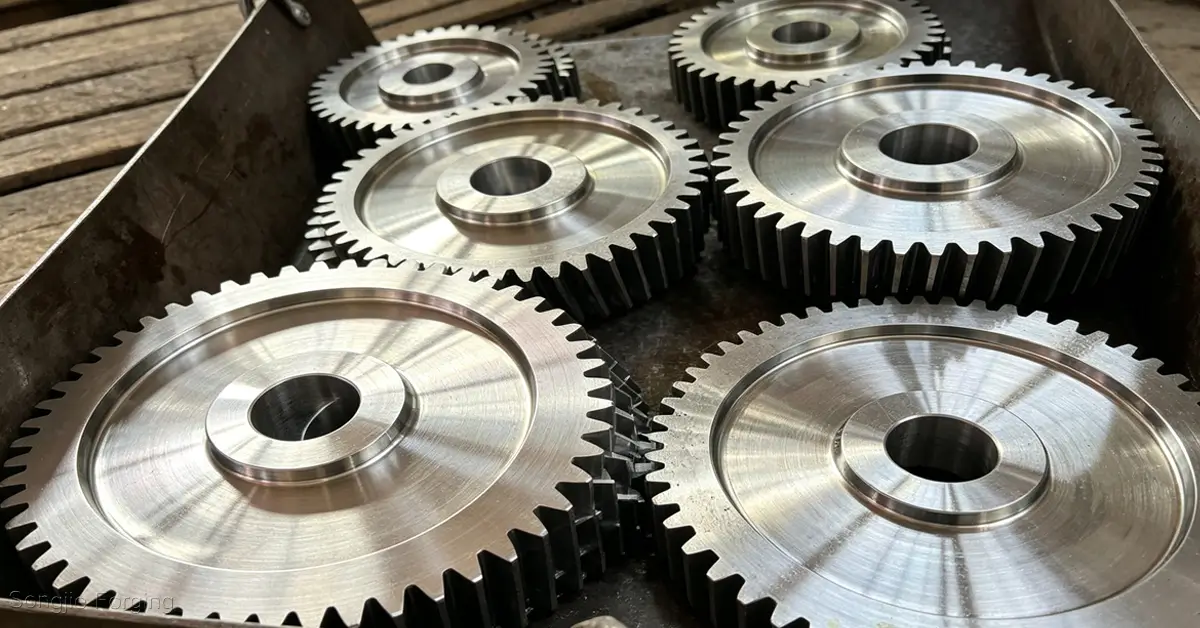
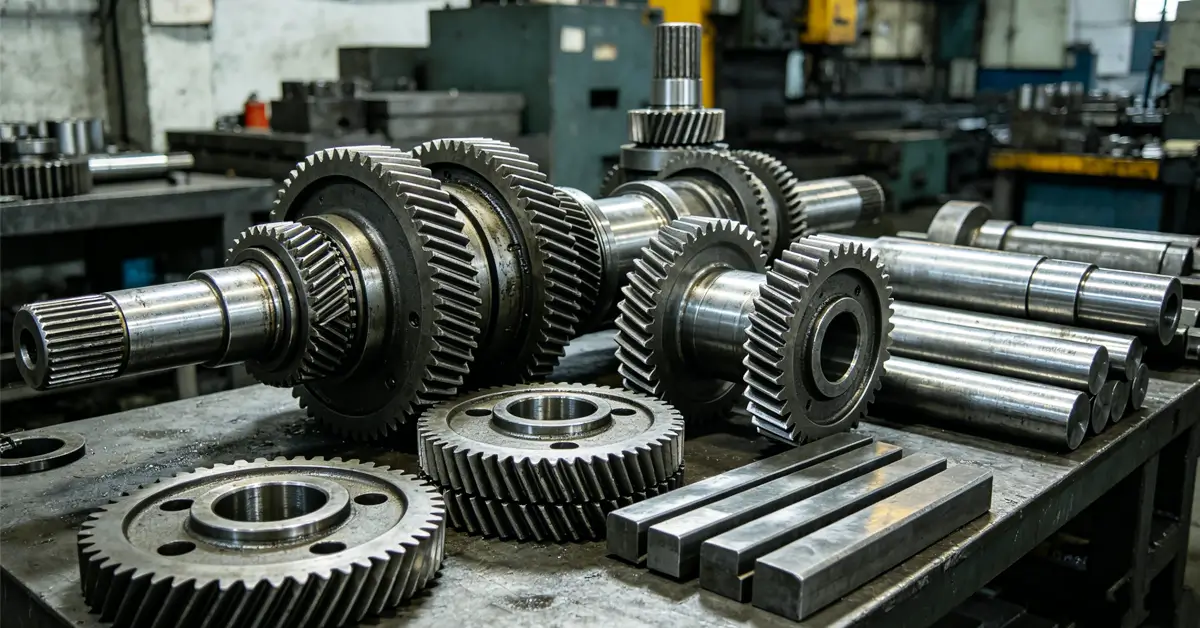
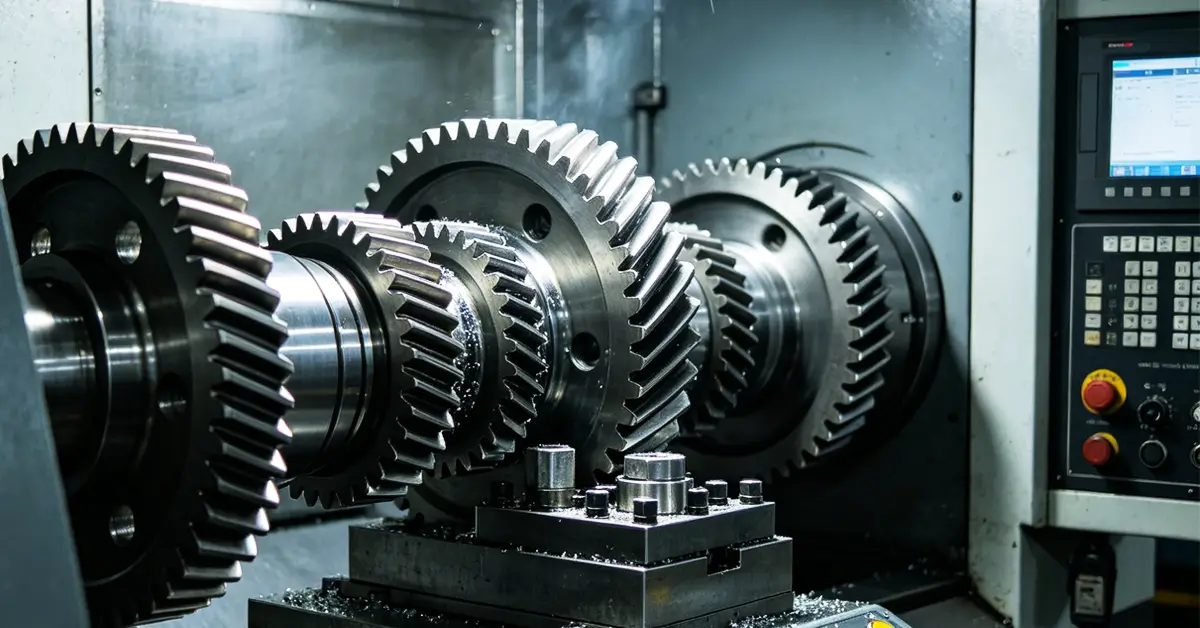
Diverse gear materials deliver distinct properties due to their unique chemical compositions and heat treatment processes, making them suitable for varying working conditions and application fields. Below is a detailed analysis of several mainstream steel gear applications:
1. Carbon Steel Gear Applications
Carbon steel is the most widely used material on the market and a general-purpose gear material with outstanding cost performance. For instance, 45# steel features a moderate carbon content and excellent machinability. Its surface hardness and overall toughness can be improved via quenching and tempering as well as high-frequency quenching. With low processing difficulty, sufficient raw material stock and low procurement costs, it is ideal for mass production of standard gears.
Main Application Scenarios:
Steel gear applications of this material cover non-critical transmission gears for civilian light industrial machinery, conventional machine tools, agricultural equipment, light conveyor belts, conveying systems, standard reducers and general household appliances. They are extensively utilized for manufacturing medium-to-low load spur gears, helical gears, gear racks and other similar parts. Besides, they are also adopted for automotive transmission gears, differential bevel gears, slewing drive gears, planetary gears in wind turbine gearboxes, and many other components.
2. Alloy Structural Steel Gear Applications
By adding alloy elements such as chromium, nickel and molybdenum, alloy steel gears feature remarkably improved strength, hardness, toughness, wear resistance and fatigue life. In particular, quenched and tempered alloy steel achieves uniform and superior overall properties. Suitable for working conditions under heavy loads and high stress, it serves as the benchmark material for medium-load industrial gears.
Main Application Scenarios:
Quenched and tempered steel gears are widely used in heavy machinery, construction vehicles, core automotive transmission parts, aerospace equipment, large industrial speed reducers, wind power generation facilities, mining machinery, petroleum drilling and production equipment, marine transmission systems and other sectors. The applicable products cover wind power gears, heavy-duty gears, countershaft gears, large-size gears, machine tool spindle gears, supercharger drive gears, marine propulsion gears, automotive transmission gears, pressure vessel gears and other steel gears subjected to extreme shock loads and high stress.
💡Special Applications: Surface strengthening processes including carburizing quenching and nitriding can further boost tooth surface hardness and fatigue resistance to withstand extreme working conditions.
3. Stainless Steel Gear Applications
Equipment operating in humid, acidic, alkaline, low-temperature and corrosive media environments is prone to rusting, corrosion and seizure. Stainless gear steels 201, 304 and 316 deliver outstanding rust and corrosion resistance to effectively withstand erosion from seawater, acids, alkalis and other corrosive substances, greatly extending equipment service life, making them the primary material choice for special working conditions.
Main Application Scenarios:
Such steel gear applications are commonly deployed in food processing machinery, pharmaceutical equipment, chemical transmission devices, medical instruments, mariculture machinery, marine and offshore equipment, outdoor machinery, cleaning equipment and more, guaranteeing hygiene and safety throughout product production.
They are used to manufacture precision gears that demand balanced hardness, cleanliness and corrosion resistance, including general chemical gears, bearing gears, cutter gears, chemical pump gears, medical gears, seawater desalination unit gears, pharmaceutical reactor gears, packaging machine drive gears, as well as conveying and stirring gears for food machinery.
💡Special Applications: For applications requiring both corrosion resistance and load-bearing capacity, martensitic grades 420 / 440C or precipitation-hardened 17-4PH (hardness up to HRC 45–55) are recommended instead of austenitic 304 / 316.
4. Tool & Die Steel Gear Applications
Gears made from this material feature ultra-high hardness, exceptional wear resistance, thermal fatigue performance and dimensional stability, albeit at a higher material cost.
Main Application Scenarios:
Such steel gear applications are primarily adopted for high-precision gears used in robot joints, precision machine tool spindles, heat treatment furnace conveying gears, injection molding machine gears, internal combustion engine matching gears, hot pressing forming equipment, die-casting machinery, mold manufacturing equipment and measuring instruments. They are especially suitable for working environments with heavy abrasion and strict precision requirements.
5. Nitriding Steel Gear Applications
Unlike conventional quenched steel gears, precision nitrided gears undergo low-temperature nitriding treatment, which results in minimal heat treatment distortion, superior dimensional accuracy and ultra-high surface hardness. They exhibit outstanding performance in wear resistance, anti-seizure capacity, corrosion resistance and high-temperature tolerance, making them the primary material option for high-end precision gears. Moreover, they operate stably at high speeds over long service periods without vibration or abrasion and maintain zero dimensional deviation, delivering a far longer fatigue life than standard alloy gears.
Main Application Scenarios:
Such steel gear applications target precision working conditions requiring high rotational speed, high dimensional accuracy, low noise and extended service life, matching the demands of high-end precision manufacturing industries. Typical applications include spindle gears for precision CNC machine tools, gears for high-speed automated equipment, drive gears for instruments and meters, supporting precision gears for aerospace components, gears for high-end servo reducers, gears for printing and packaging machinery, hydraulic pump gears, and transmission components for medical equipment.
💡Special Applications: For thin-walled gears and parts with complex tooth profiles that are extremely sensitive to heat treatment distortion, nitriding is the optimal solution due to its nearly distortion-free characteristic.
III. FAQs on Steel Gear Applications
A1: Select 40Cr for medium-load standard working conditions if cost performance is your priority. For heavy-duty, high-impact heavy industry scenarios requiring superior wear resistance and long-term continuous operation, 20CrMnTi is mandatory. Its service life is 2–3 times that of 40Cr, yet it comes with higher procurement costs.
A2: Carbon steel and alloy gears provide higher cost efficiency and greater hardness under ordinary dry industrial environments. Stainless steel gears are indispensable for special corrosive, humid and sterile applications; otherwise, rust, seizure and equipment breakdowns will readily occur.
A3: New energy vehicles feature high rotating speeds, large gear ratios and fewer gears. Their gears must withstand high torque and high rotational speeds while maintaining low noise. Therefore, ultra-clean high-precision gear steel with stable hardenability, uniform chemical composition and fine grain size is required for manufacturing matching gears for new energy vehicles.
III. Conclusion
Beyond the aforementioned categories, there exists a wide range of other steel gear applications. The core principle for gear material selection lies in matching materials to actual working conditions, aligning performance with operational demands, and keeping costs under control. At Songjie, we have precise mastery over the applicable scenarios of all steel gear materials as well as all steel gear advantages. We offer customization services and deliver professional one-stop solutions covering gear material selection, production and machining.