
Alloy Steel Gear Shafts Core Performance Advantages
From the transmission system of automobiles to the core components of precision mechanical equipment, and from the power transmission of wind turbines to the key structure of aero-engines, alloy steel gear shafts are ubiquitous with their excellent performance. They play an indispensable and crucial role, silently supporting the efficient operation of countless mechanical devices. So, what are the specific core properties of this forged shaft? This article will explore them with you.

High Strength
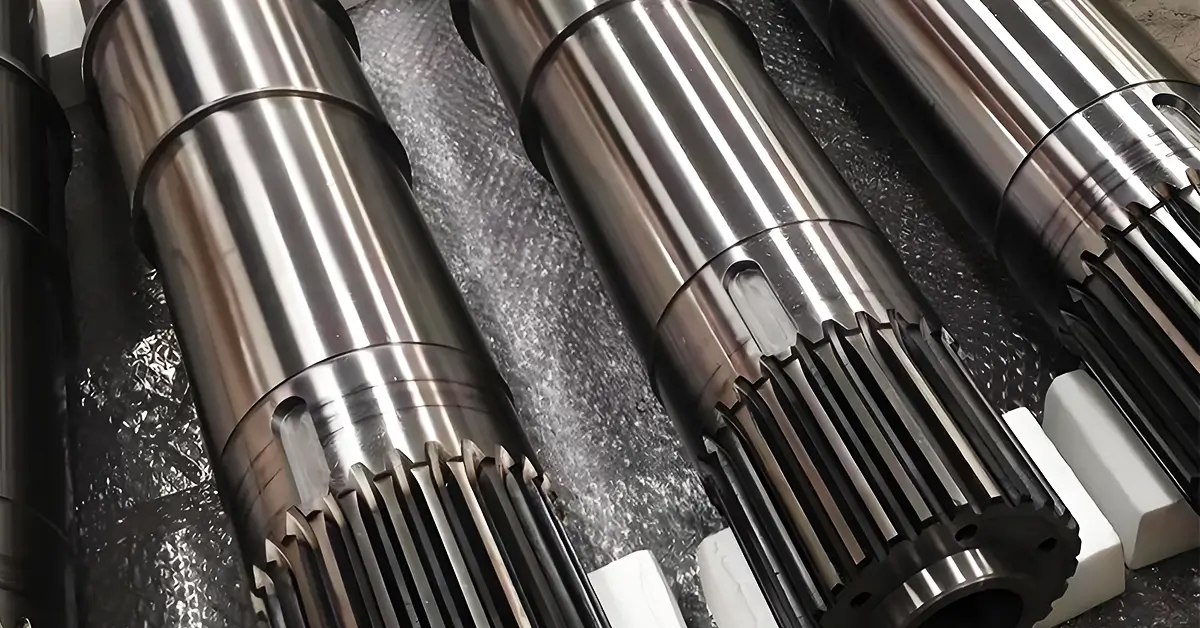
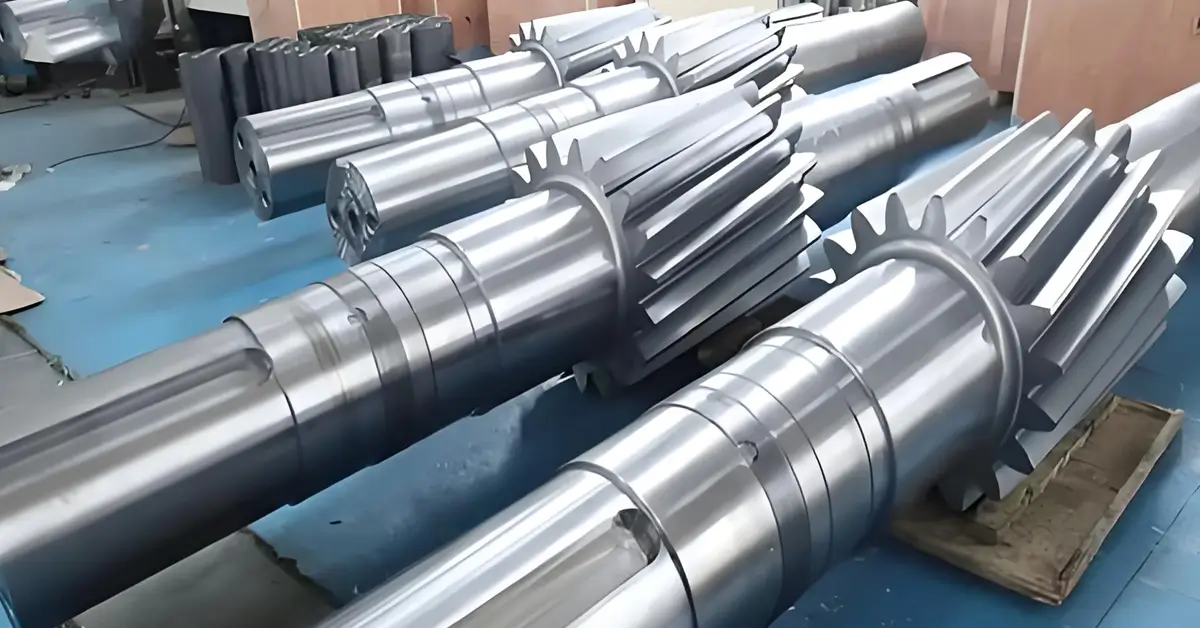
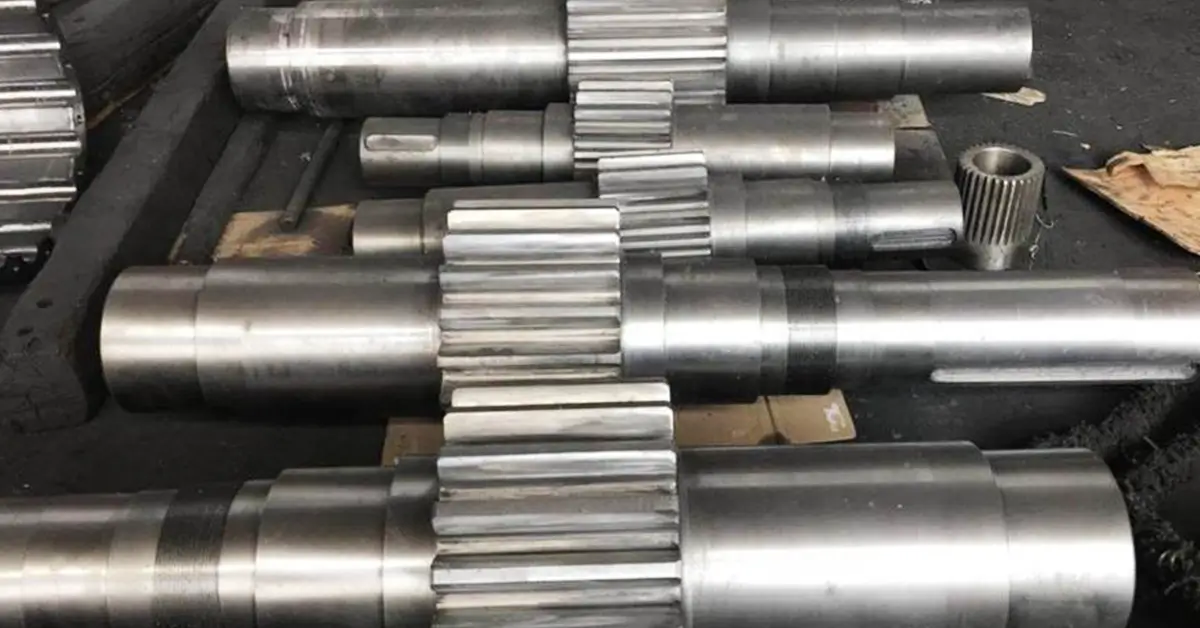
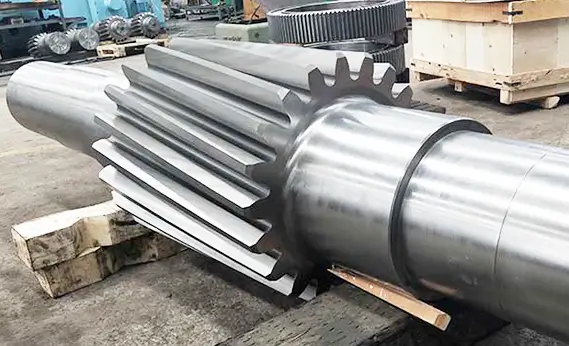
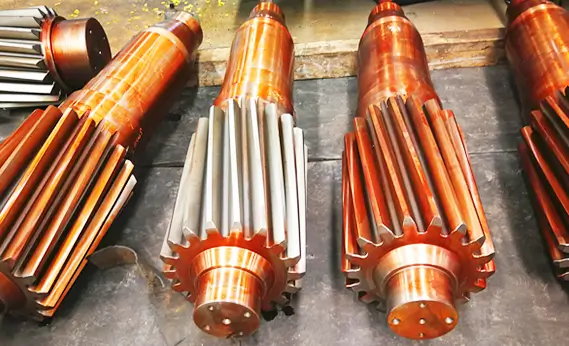
The high strength of alloy steel gear shafts is their core competitive edge. This is attributed to carefully selected alloy steel materials, where multiple alloying elements work synergistically. Coupled with sophisticated forging and heat treatment processes, their internal structure becomes dense and ordered—like precisely arranged “steel warriors”—greatly enhancing strength and achieving “hard exterior and tough interior.”
Taking the common 42CrMo alloy steel gear shaft as an example, in the transmission system of automobile engines, it can easily withstand torques and axial forces of thousands of Newton-meters. Even when facing strong impact forces generated during sudden acceleration or braking, it remains “stable as a mountain,” ensuring stable power transmission, maximizing power transfer efficiency, reducing energy loss, and extending service life.
Wear Resistance
This property refers to the gear shaft’s ability to resist wear during operation and maintain stable performance throughout its service life. All mechanical movements are accompanied by wear, yet the hardness and wear resistance of alloy steel gear shafts enable them to retain geometric accuracy and load-bearing capacity for a longer period. This reduces maintenance and replacement frequency, lowering the total cost of ownership of equipment. It is mainly due to the material’s inherent characteristics and special surface treatment processes, which form a hard protective film on the shaft surface to effectively reduce friction and wear, thereby extending service life.
Taking conveyors on industrial production lines as an example, their forged shafts need to operate continuously for long hours—up to 16 hours a day or even longer. Under such high-intensity usage, excellent wear resistance becomes particularly crucial.
High Precision
The machining precision of gear shafts directly affects gear meshing performance, serving as a key indicator of shaft quality and bearing a direct impact on the accuracy, smoothness, and efficiency of mechanical transmission. High-precision alloy steel gear shafts can reduce wear and improve transmission efficiency, playing a decisive role in the stable operation and performance of equipment. This means that under high-speed operation, excellent concentricity can significantly reduce vibration and noise, enhancing the smoothness of equipment operation.
In the machining process, advanced CNC machining equipment and precision processing technologies—such as high-precision turning, grinding, milling, and gear shaping—ensure the dimensional and geometric accuracy of forged gear shafts. Their tolerances can be controlled within an extremely small range, guaranteeing that each gear shaft meets high-precision standards. In precision instruments, such as the transmission mechanism of optical microscopes, high-precision alloy steel gear shafts ensure the accurate movement of the stage, allowing researchers to clearly observe the microcosm and facilitating the smooth progress of scientific research.
High Toughness and Fatigue Resistance
High toughness enables alloy steel gear shafts to handle impacts and vibrations with ease, demonstrating the characteristic of “combining rigidity with flexibility.” When equipment starts, stops, or operates under complex working conditions, impacts and vibrations are inevitable. Thanks to their inherent toughness, alloy steel gear shafts can effectively absorb and buffer these energies, preventing sudden fractures. For instance, in crushers of mining machinery, alloy steel gear shafts are frequently impacted by ores, but their excellent toughness allows them to maintain stable operation, ensuring the continuous and efficient progress of ore crushing.
Fatigue resistance, on the other hand, allows the shafts to repeatedly withstand alternating loads during operation, maintaining stable performance and preventing fractures caused by stress concentration. Furthermore, optimizing the fillet radius of tooth roots and applying surface strengthening treatments (such as shot peening and rolling) can significantly enhance their fatigue resistance. Typical application scenarios include wind turbine gearboxes, marine propulsion systems, construction machinery, and other high-impact environments.
Conclusion
In addition to the above, alloy steel gear shafts also feature high efficiency and energy saving, stability and reliability, durability, corrosion resistance, and strong adaptability. These advantages enable them to demonstrate remarkable competitiveness in multiple fields and become a key driving force for the development of various industries. Such excellent performance stems from the strict control and optimization of every link in the manufacturing process of steel gear shafts, allowing them to meet the needs of more customers and the market.